

Tartar Calculus Removal: How Ultrasonic Tech Makes It Easy
From 1950s dental offices to your bathroom: the 70-year story of the technology that changed calculus removal forever.
In the 1950s, dental offices were the only place on earth where ultrasonic scaling existed. The equipment filled a countertop, required water cooling, and was operated exclusively by trained clinicians. The physics that made it revolutionary then is exactly the same physics now available in a device you can hold between two fingers.
The Origin: 1955 and the First Ultrasonic Scaler
The first clinical ultrasonic scaler was developed in the mid-1950s by Paul Nara and colleagues, who adapted industrial ultrasonic cleaning technology for dental use. Industrial ultrasonic cleaners, developed during World War II for precision cleaning of metal parts, used piezoelectric or magnetostrictive transducers to generate high-frequency vibration in a liquid medium. The vibrational energy disrupted contamination from metal surfaces through cavitation, creating microscopic bubbles that imploded at the surface and dislodged even tightly bonded contaminants.
The dental application recognized that calculus on tooth surfaces presented a similar problem: a bonded, crystalline deposit on a harder substrate that needed to be disrupted without damaging the substrate. The physics translated directly. Clinical ultrasonic scalers were in widespread professional use by the late 1960s and had largely replaced the hand scaling instruments for supragingival calculus in most practices by the 1980s.
For 60 years, this technology was available only in dental offices. The barrier was not the physics but the engineering challenge of miniaturizing the transducer, power supply, and tip geometry into a format that was safe and usable by non-professionals.
Clinical ultrasonic scalers use either piezoelectric transducers (crystals that change dimension when electrically excited) or magnetostrictive transducers (metal stacks that vibrate in a magnetic field). Piezoelectric scalers operate at 25,000 to 50,000 Hz. Magnetostrictive units operate at 18,000 to 45,000 Hz. Consumer home devices use miniaturized piezoelectric transducers, the same basic mechanism as the clinical tools, scaled to a safe output level.
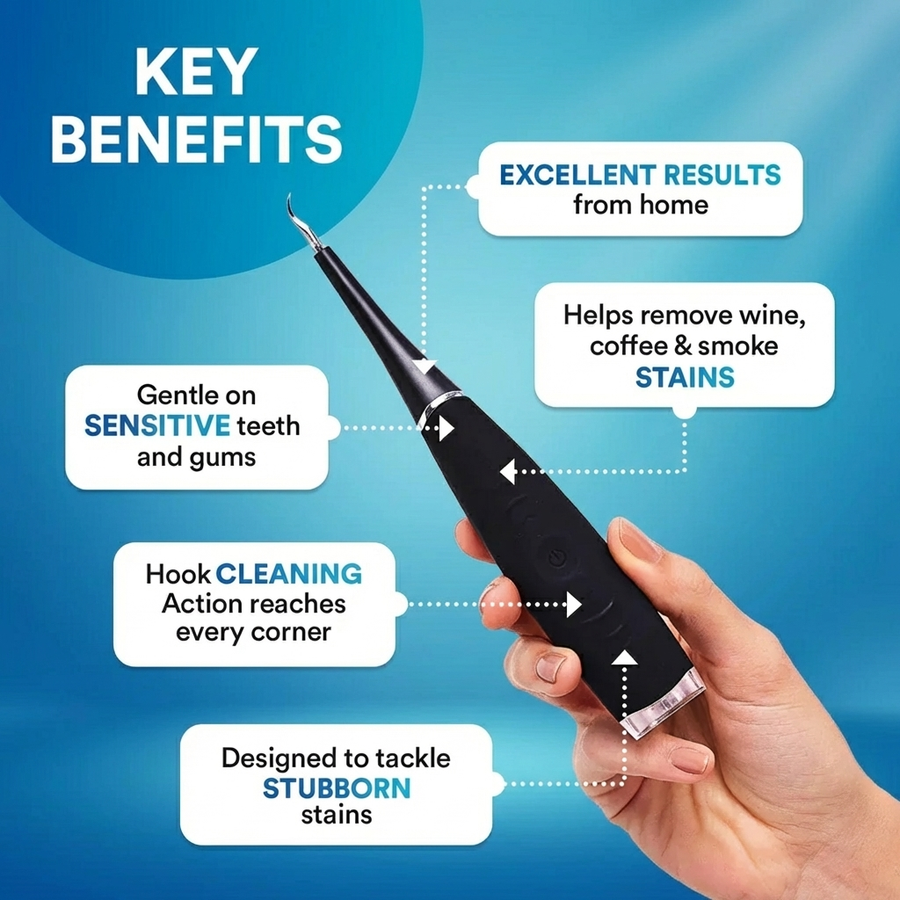
Ultrasonic Tooth Cleaner by Lindalia
70 years of clinical ultrasonic scaling, now in a pen-sized USB-rechargeable device. The same physics, calibrated for home use.
See the ProductHow the Physics Works on Calculus
Dental calculus, as described elsewhere, is primarily calcium phosphate minerals in crystalline form. Crystal structures have a characteristic feature: they respond to vibration at specific resonant frequencies, and at those frequencies, internal stresses concentrate at structural weak points. In calculus, the weakest structural point is the adhesion interface: the chemical and mechanical bond between the mineral deposit and the enamel surface below it.
When an ultrasonic tip transmits vibrational energy into a calculus deposit, the energy propagates through the crystal lattice. At sufficient amplitude and with sustained application, micro-fractures develop at the adhesion interface. The deposit does not need to be cut or scraped; it needs to absorb enough vibrational energy that the adhesion bond fails under internal stress. The moment that bond fails, the deposit detaches as a unit or in fragments.
The cavitation effect adds a secondary mechanism. The vibrating tip agitates the surrounding liquid (saliva), generating microscopic bubbles that collapse violently at the deposit surface. These micro-implosions contribute additional mechanical energy to the disruption process and also disrupt bacterial biofilm in areas the tip does not physically contact.
The Miniaturization Milestone
Making clinical ultrasonic technology safe for home use required solving several distinct engineering problems. First, output calibration: the power level had to be reduced to a range that fractures soft-to-moderate calculus (Mohs hardness 3 to 4) without affecting enamel (Mohs hardness 5) even with less-than-perfect technique. This required understanding the threshold energy levels at which enamel surface effects begin, and calibrating the device output below that threshold with a meaningful safety margin.
Second, tip geometry: clinical scaler tips are precision-ground with sharp edges and specific angulations for subgingival access. Consumer tips needed to be effective for supragingival access without presenting the laceration and gouging risk of sharp clinical tips. The solution was rounded, smooth tip materials that transmit vibrational energy effectively to the contact area without cutting on contact.
Third, battery and form factor: the device needed to fit in a normal hand, hold enough charge for realistic usage patterns, and charge from ubiquitous interfaces rather than proprietary systems. USB rechargeable pen-sized designs solved all three simultaneously.
The engineering insight that made home ultrasonic devices viable: enamel and calculus have different resonant responses to vibrational energy. At the frequencies and amplitudes used in home devices, calculus bonds are disrupted while enamel surface effects are below any measurable threshold. This is not an approximation; it was verified through scanning electron microscopy studies comparing enamel surfaces before and after at-home ultrasonic treatment.
70 years of clinical physics, now in your bathroom. The science has not changed. Only who gets to use it.
What This Means Practically
The availability of calibrated ultrasonic technology for home use changes the fundamental dynamic of oral health maintenance for most adults. Previously, the only way to remove calculus was to schedule a professional appointment: book a hygienist visit, take time from work or other commitments, pay a clinical fee, and undergo an appointment that many people find anxiety-inducing. The calculus still formed in the weeks and months between appointments; the professional visit simply reset the accumulation clock.
With home ultrasonic maintenance, you can intervene in the calculus cycle at home, before deposits have had months to build and harden. You are not replacing the professional visit (the diagnostic function and subgingival scaling still require clinical tools). But you are compressing the accumulation window from months down to days, which changes how much the professional visit needs to address.
For people who have avoided or delayed dental care due to cost or anxiety, this is a meaningful shift. Consistent home maintenance cannot replace care for existing problems, but it can slow the rate at which new problems develop and make the professional appointments that do happen shorter, less intensive, and less costly.
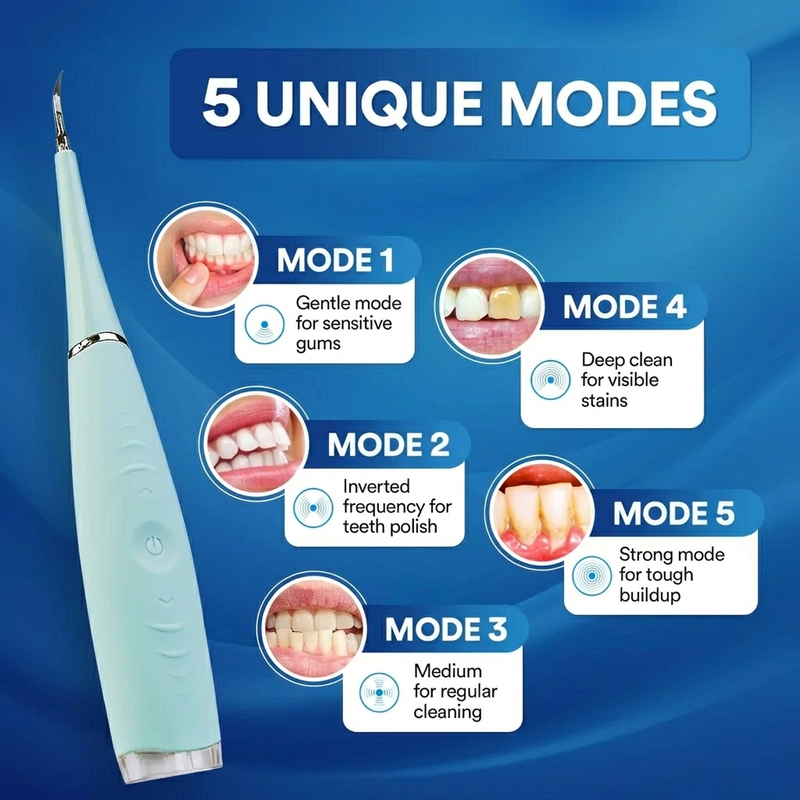
Lindalia Ultrasonic Tooth Cleaner
Calibrated piezoelectric vibration in a pen-sized device. USB rechargeable. Fine and flat tips. The clinical technology adapted for your bathroom.
See the ProductThe Next Step in At-Home Dental Care
The trajectory of dental technology has consistently moved toward making clinical capabilities accessible outside the clinical setting. Fluoride toothpaste brought professional-grade remineralization home. Electric toothbrushes brought professional-grade plaque removal consistency home. Home ultrasonic devices bring the one clinical capability that remained exclusive to professional settings until recently: calculus removal.
The gap between professional and at-home dental care is narrower than it has ever been. For the most common problem in adult oral health, which is chronic calculus accumulation leading to gum disease, cavities, and costly professional intervention, the tools for meaningful home management exist, work on validated physics, and are accessible to anyone.
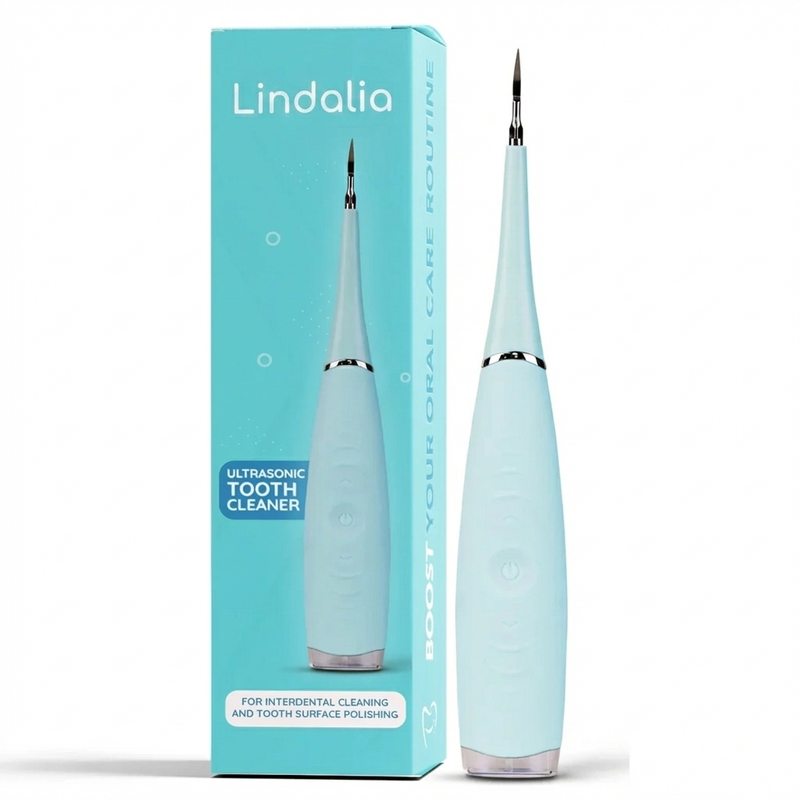
Lindalia Ultrasonic Tooth Cleaner
The same physics as a dental office ultrasonic scaler, calibrated for safe, effective at-home use. Fine metal tip, LED, USB rechargeable. This is what 70 years of dental science built toward.
See the Product