

Tartar Removal: How to Get Rid of Buildup Without a Dental Visit
What home care can genuinely replicate, what it cannot, and how consistent maintenance changes what professional visits need to accomplish.
Professional dental cleanings matter. But at $100 to $300 per visit, requiring time off work, and often involving the most anxiety-inducing dental experience for most adults, the question of whether you can meaningfully reduce visit frequency through at-home care is worth answering honestly. The answer, with appropriate caveats, is yes.
What Happens at a Professional Cleaning
A standard professional cleaning, which clinicians call a prophylaxis, involves three primary stages. First, the hygienist uses ultrasonic scalers or hand scalers (or both) to remove all supragingival calculus: deposits above the gum line accessible from the crown surface. Second, a curette or similar instrument removes subgingival calculus: deposits that have formed in the sulcus, the groove between tooth and gum. Third, polishing with a rubber cup and prophy paste smooths the enamel surfaces to reduce stain and plaque adherence.
The professional appointment also includes examination for deeper periodontal pockets (spaces where the gum has detached from the tooth, indicating advancing gum disease), radiographic assessment, and caries detection. These diagnostic functions cannot be replicated at home and represent a distinct value from the cleaning procedure itself.
You can replicate approximately 60 to 70% of what a professional cleaning achieves in terms of calculus removal for supragingival deposits. You cannot replicate subgingival scaling, periodontal assessment, or radiographic diagnosis. Home maintenance reduces the cleaning workload at professional visits; it does not make those visits optional.
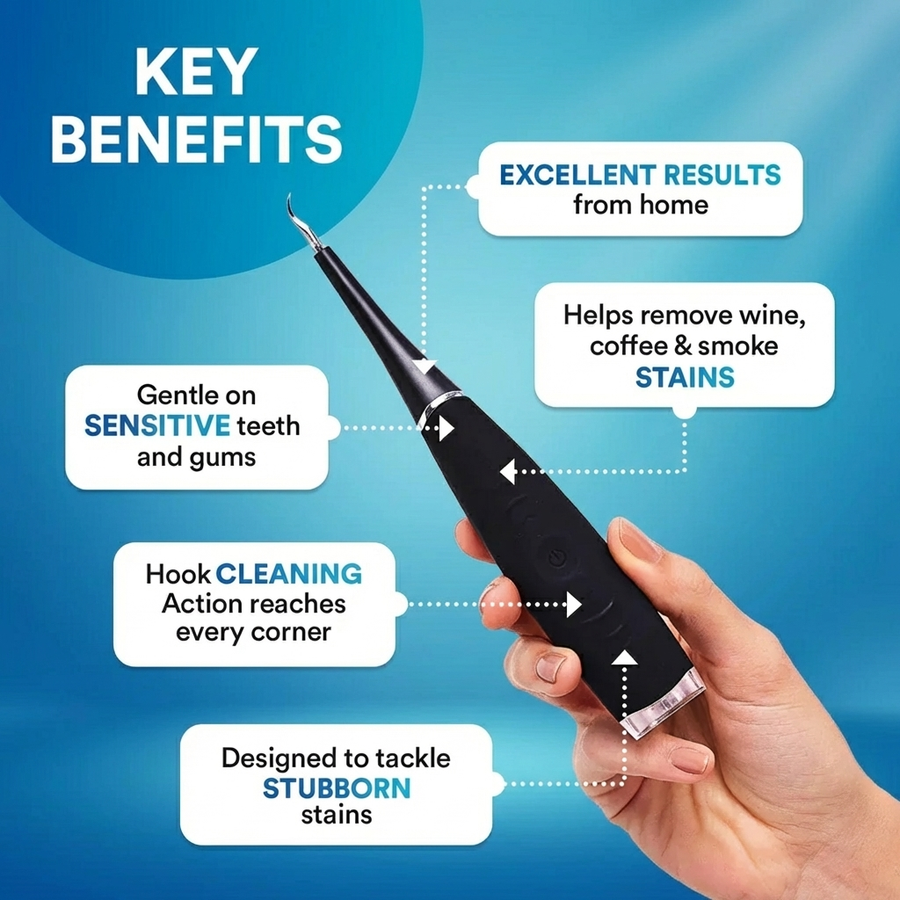
Ultrasonic Tooth Cleaner by Lindalia
Supragingival calculus removal at home, 2 to 3 times per week. Reduce what your hygienist finds at each visit. Fine metal tip, LED, multiple modes.
See the ProductWhat You Can Replicate at Home
Supragingival calculus removal is achievable at home with a quality ultrasonic device used consistently. The inner lower front teeth and outer lower back molars, which are the highest-accumulation surfaces, are accessible and well within the reach of a fine-tipped home device. Consistent sessions 2 to 3 times per week reduce the rate of deposit accumulation measured at professional visits by a clinically meaningful margin.
Surface polishing is achievable at home using the flat polishing tip of an ultrasonic device with a small amount of toothpaste. This does not replicate the abrasive power of a professional rubber-cup polish, but it smooths surfaces after calculus removal and reduces the adhesion of new staining and plaque.
Plaque management through brushing and flossing reduces the ongoing raw material for new calculus formation. This is prevention in the truest sense: you are not just cleaning what is there but reducing the rate at which new deposits form.
What Only a Professional Can Do
Subgingival calculus, which is tartar that has formed below the gum line in the periodontal pocket, requires instruments with the geometry and power to access this space safely. Consumer-grade devices are deliberately designed not to reach below the gum line, because subgingival instrumentation without training risks traumatizing the gum attachment apparatus. If you have calculus below the gum line (indicated by consistent gum bleeding, gum recession, or deepening pocket depths noted at prior visits), professional care is necessary, not optional.
Periodontal assessment requires probing with a calibrated probe to measure pocket depth at six points around each tooth. Changes in these measurements over time indicate advancing or resolving gum disease. No at-home tool substitutes for this assessment.
Radiographic diagnosis of interproximal caries (cavities between teeth), root resorption, or bone level changes requires X-rays. These are taken at professional appointments at clinically indicated intervals and cannot be replaced by any at-home practice.
Whether you can safely extend your professional cleaning interval depends on your individual calculus formation rate and gum health status. Some people form significant calculus within 3 months of a cleaning. Others are relatively stable for 9 to 12 months. With your dentist's agreement and ongoing home maintenance, extending from 6-month to 9-month intervals is often reasonable for low-risk patients with good home care.
The Economic Case for Home Maintenance
A professional cleaning costs between $100 and $300 depending on location and practice, more for deeper cleaning (scaling and root planing) if significant subgingival calculus has accumulated. At twice-yearly intervals, this is $200 to $600 annually, not counting diagnostic fees or restorative work.
A quality at-home ultrasonic device costs a fraction of a single professional cleaning and lasts 2 to 3 years with normal use. The ongoing cost is minimal: USB charging and occasional tip replacement. Users who maintain consistent home routines and extend their professional cleaning intervals from 6 to 9 months (with provider agreement) recover the device cost in direct savings within the first year. The indirect benefit, less calculus accumulated means shorter and less intensive cleanings, also reduces per-visit cost in time if not in billed fees.
Home maintenance does not replace professional care. It changes what professional care needs to address. That difference adds up.
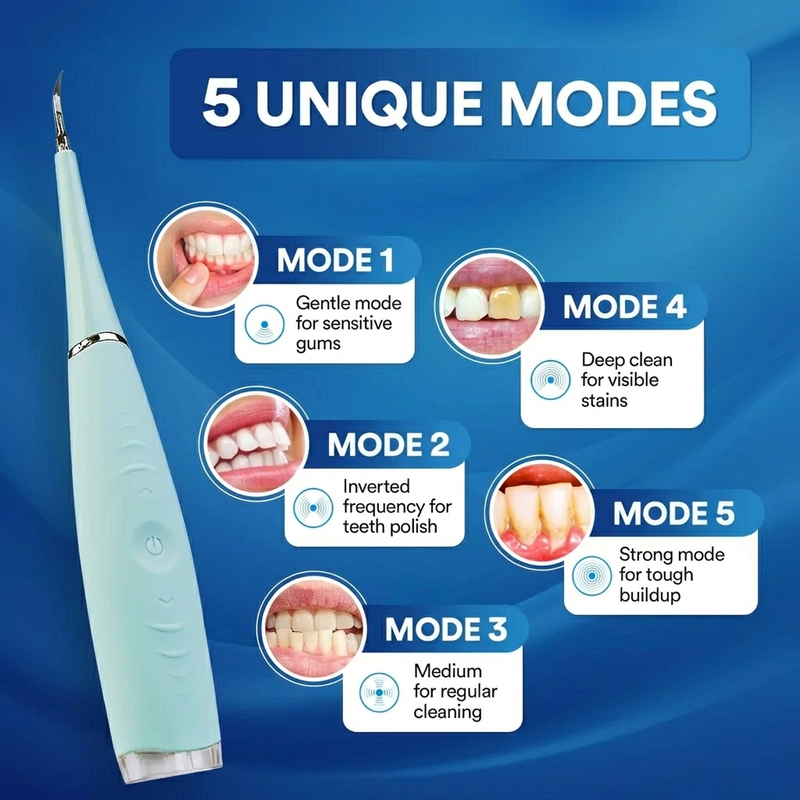
Lindalia Ultrasonic Tooth Cleaner
Consistent at-home supragingival removal. Less buildup at each visit means shorter, less intensive, less costly professional cleanings.
See the ProductWhen to Go Regardless
Consistent gum bleeding during brushing, flossing, or tool use is a signal that requires professional assessment. Gum recession (teeth appearing longer than before), sensitivity at the gum margin, or visible dark deposits below the gum margin are all indicators of conditions that professional care must address first.
New persistent sensitivity that was not present previously, especially to temperature or percussion, warrants examination for caries or cracked tooth syndrome. These conditions do not resolve with home care and worsen if left untreated.
The standard recommendation of professional examinations every 12 months (cleaning intervals may vary) exists because several conditions are not detectable at home and worsen with delayed treatment. Home maintenance changes the cleaning workload, not the diagnostic need.
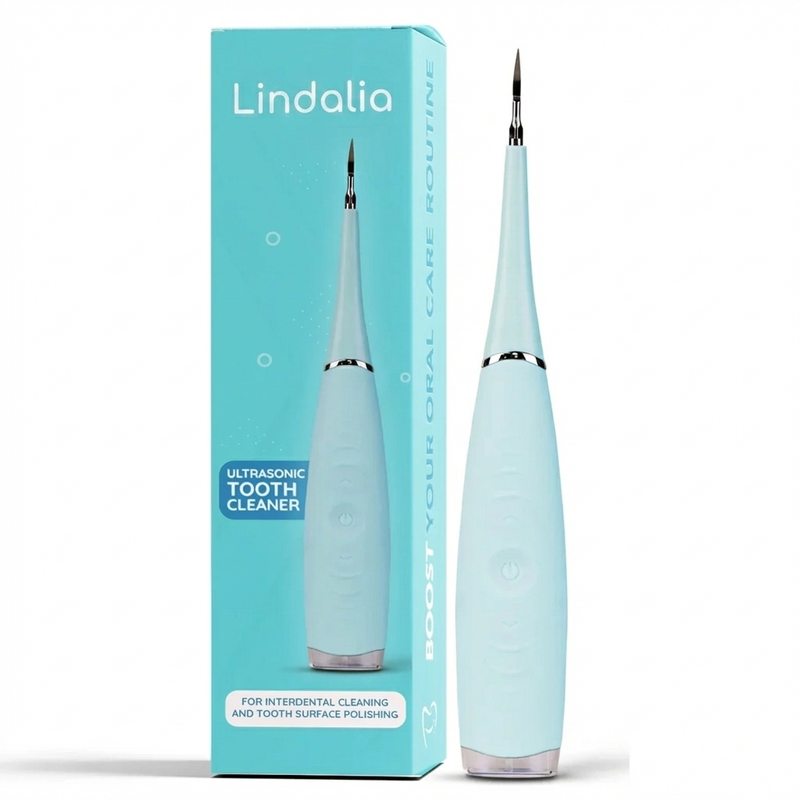
Lindalia Ultrasonic Tooth Cleaner
Fine tip for calculus, flat tip for polishing. USB rechargeable with 200+ uses per charge. The tool that changes what your professional visits need to accomplish.
See the Product