

Tooth Cleaning Ultrasonic: Is It Safe to Use at Home?
The real risks, the non-risks, and the specific situations where extra caution is warranted.
Safety is the first question anyone should ask before introducing a vibrating metal tip near their gum tissue and enamel. The honest answer is nuanced: home-grade ultrasonic devices are genuinely safe when used correctly, and there are specific situations where caution is warranted. Here is what the evidence actually shows.
Why Enamel Is Not at Risk
The most common concern is that vibration will damage enamel. This concern makes intuitive sense: you are putting a vibrating metal tip directly onto your teeth. But the physics work in your favor here.
Enamel is the hardest biological material in the human body, sitting at approximately 5 on the Mohs hardness scale. This is harder than most metals including iron (4 to 5) and approaching the hardness of steel (approximately 6). Dental tartar, by comparison, measures 3 to 4 on the same scale. It is meaningfully softer than the surface it adheres to.
Home-grade ultrasonic devices are calibrated to disrupt tartar and pellicle at energy levels below the threshold that would affect the enamel surface. The vibration targets the bond between the softer deposit and the harder tooth surface, not the tooth itself. Clinical research comparing pre- and post-treatment enamel surfaces with electron microscopy consistently shows no measurable enamel surface alteration from correctly used at-home ultrasonic devices.
Tartar (3 to 4 on Mohs scale) is significantly softer than enamel (approximately 5). Ultrasonic vibration fractures the softer deposit at its bond with the harder surface without damaging the surface itself, in the same way you can remove a sticker from glass without scratching the glass if you use the right technique.
The Real Risks: Where to Actually Be Careful
The genuine risks with at-home ultrasonic use are not about enamel damage from the vibration itself. They are about technique and application context.
Pressure is the primary risk factor. Some users instinctively apply manual pressing force to the tip, as they would with a traditional scaler or even a toothbrush. This is unnecessary and potentially harmful. The ultrasonic action does not require pressure. The tip should barely graze the tooth surface. Pressing firmly concentrates mechanical stress at the tip contact point and can cause micro-scratches on root surfaces (which are softer than enamel) or cause irritation at the gum margin.
Lingering in one spot is the second risk factor. Holding the vibrating tip stationary on any surface for more than 2 to 3 seconds concentrates heat from the vibration and increases the risk of sensitivity. Keep the tip moving continuously, like a slow sweep rather than a press-and-hold.
Gum margin angle matters. The tip should approach the gum margin at a flat, nearly horizontal angle, not perpendicular to it. Driving the tip vertically into the sulcus (the groove between tooth and gum) causes soft tissue irritation and is not more effective at removing deposits.
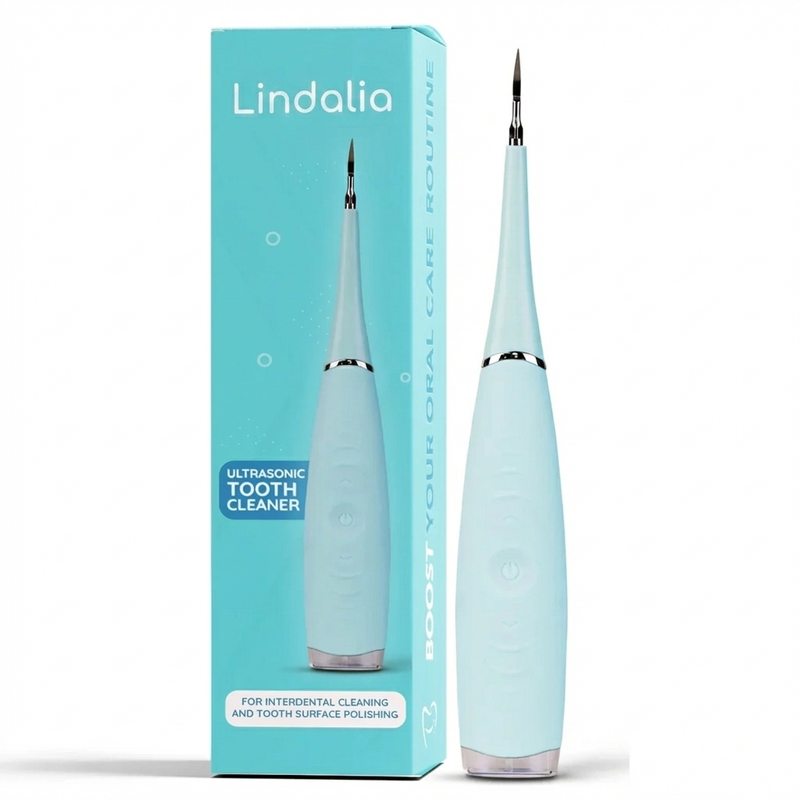
Ultrasonic Tooth Cleaner by Lindalia
Multiple intensity modes for calibrated use. LED light for visibility. Pressure-responsive design. Safe for bonding, veneers, and crowns.
See the ProductSafety Around Dental Restorations
Many people with bonding, veneers, or ceramic crowns worry that ultrasonic vibration will damage their dental work. This is a reasonable concern worth addressing specifically.
Composite bonding: home-grade ultrasonic devices are generally safe around bonding. Professional-grade scalers at full clinical power can affect the bond between composite and enamel with prolonged contact, but at-home device power levels are significantly below this threshold. Use low intensity around bonded areas and keep the tip moving.
Porcelain veneers: similar principle. At-home power levels do not generate enough energy to damage the porcelain-to-tooth bond under normal use. If you have had veneers placed recently (within 6 months), some conservative practitioners recommend waiting until full bond maturation before using any new tool near them. After that period, home-grade ultrasonic use is generally considered safe.
Metal amalgam fillings: safe. The vibration does not affect the amalgam material or the seal at the filling margin.
Ceramic crowns and implants: use low intensity settings around ceramic surfaces and around the implant-gum interface. The crown itself is durable; the concern with implants is less about the device and more about technique near the soft tissue around the implant.
Ultrasonic devices of any kind, including home-grade, should not be used if you have a cardiac pacemaker unless your cardiologist has specifically cleared it. The electromagnetic interference concern is primarily with older pacemaker models, but the precaution stands. If you have any implanted electronic medical device, check with the relevant specialist first.
Who Should Approach with Extra Caution
People with gum disease (gingivitis or periodontitis) should consult their dental provider before starting home ultrasonic use. Active gum disease means inflamed, potentially fragile soft tissue at the gum margin. Using any device, including an ultrasonic one, near actively diseased tissue before addressing the underlying condition can cause irritation and bleeding. The correct sequence is: treat the gum disease first (usually with professional deep cleaning and improved oral hygiene), then add home ultrasonic maintenance.
Those with exposed root surfaces due to gum recession need to be particularly careful around those areas. Root cementum (the material covering the root) is softer than enamel, measuring approximately 2.5 on the Mohs scale. Use the lowest intensity setting and minimal contact time on any exposed root surfaces.
People with known dentinal hypersensitivity, the sharp pain response to temperature change that indicates thin or compromised enamel, should start at the lowest intensity setting and increase slowly. The vibration can temporarily increase sensitivity at affected areas, particularly on first use. This is not damage; it is the same mechanism as sensitivity to temperature. It typically reduces with continued use as the user adapts technique.
The tool itself is safe. The technique is what determines whether you are using it correctly.
Best Practices for Safe Use
A simple protocol covers the main safety bases. Begin every session on the lowest intensity setting. Hold the device like a pen, lightly, with no grip pressure. Keep the tip at a flat angle to the tooth surface. Move continuously; never hold the tip stationary for more than 2 seconds. Work in sections: lower front inner surfaces first, then upper inner surfaces, then lower back teeth, then upper back teeth. Rinse thoroughly after each session.
Run sessions for 2 to 3 minutes maximum at first. This is both a safety guideline and a practical one: most accessible calculus deposits can be disrupted in this timeframe, and longer sessions do not proportionally improve outcomes at home-safe power levels.
If you notice sharp pain during use (distinct from the unfamiliar buzzing sensation), stop and assess whether you are applying too much pressure or working at too steep an angle. Pain is informative. Discomfort from the unfamiliar sensation is not a warning sign; sharp, sudden pain is.
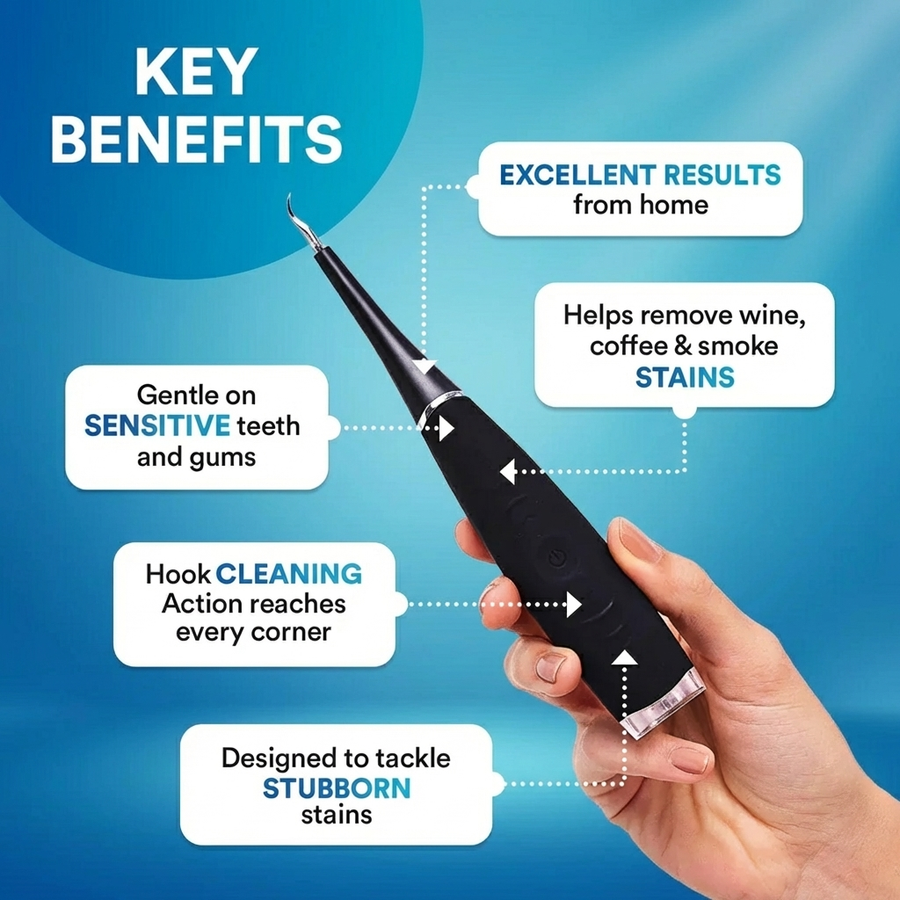
Lindalia Ultrasonic Tooth Cleaner
LED light for working visibility. Graduated intensity modes. Safe for bonding, veneers, and crowns with correct technique.
See the ProductThe Bottom Line on Safety
Home-grade ultrasonic tooth cleaners are a genuinely safe category of product for the large majority of adults. The risks that exist are technique-related, not inherent to the technology. Enamel is not at risk from correctly calibrated home devices. Common dental restorations can be used around safely at appropriate intensity levels. The contraindications (pacemakers, active untreated gum disease, very recent restorations) are specific and manageable.
The most dangerous thing most people do to their teeth at home is brush with excessive pressure with a hard-bristled brush, a practice that genuinely abrades enamel over time. A correctly used home ultrasonic device is a considerably more tooth-friendly approach to tartar management than many habits already common in most bathrooms.
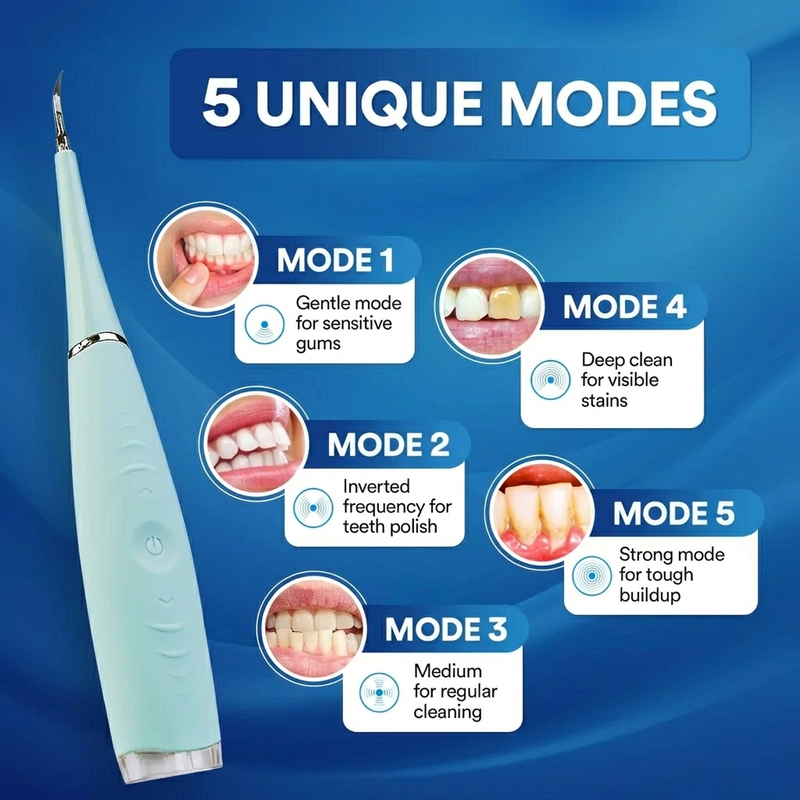
Lindalia Ultrasonic Tooth Cleaner
Multiple intensity modes from gentle to effective. Fine metal tip for precise control. Designed for comfortable, safe at-home use.
See the Product