

Topical Cyperus Rotundus Oil: How It Targets Hair Follicles Naturally
The follicle is 1 to 4mm below the skin surface. Here is exactly how topical cyperus rotundus oil reaches it, why timing matters, and why local beats oral.
There is a question worth asking before you put any product on your skin: how does it actually get to where it needs to go? For cyperus rotundus oil, the answer matters because the whole mechanism depends on it. The oil works at the follicle level, not at the skin surface. Understanding how it gets there explains why application timing and formula quality are not optional details.
Why the Skin Surface Is Not Where This Works
The hair follicle is not on the surface of your skin. It is a structure that extends 1 to 4 millimeters below the surface, depending on the body zone and hair type. The bulb at the base of the follicle, where new hair growth originates, is even deeper. For a topically applied ingredient to affect follicle activity, it needs to penetrate through the outer layers of the skin and reach the follicle wall and surrounding tissue.
Most skincare ingredients do not penetrate this deeply. Their molecular weight or lipid solubility limits them to the stratum corneum and upper epidermis. Sesquiterpenes, the active class of compounds in cyperus rotundus, have favorable characteristics for dermal penetration. They are lipophilic (oil-soluble), which means they partition readily into the lipid bilayers of skin cells and can travel through the skin's lipid matrix toward the follicle.
When the follicle is freshly opened after hair removal, the path to the follicle tissue is physically clearer. The hair shaft is gone. The follicle channel is open. An oil applied at this moment has direct access to the follicle walls, which is where the 5-alpha reductase enzyme activity is concentrated. This is why application immediately after removal is not a preference but a requirement for the follicle inhibition effect.
Sesquiterpenes from cyperus rotundus are lipophilic and penetrate through skin's lipid matrix. After hair removal, the open follicle channel provides direct access to the follicle tissue where 5-alpha reductase is active.
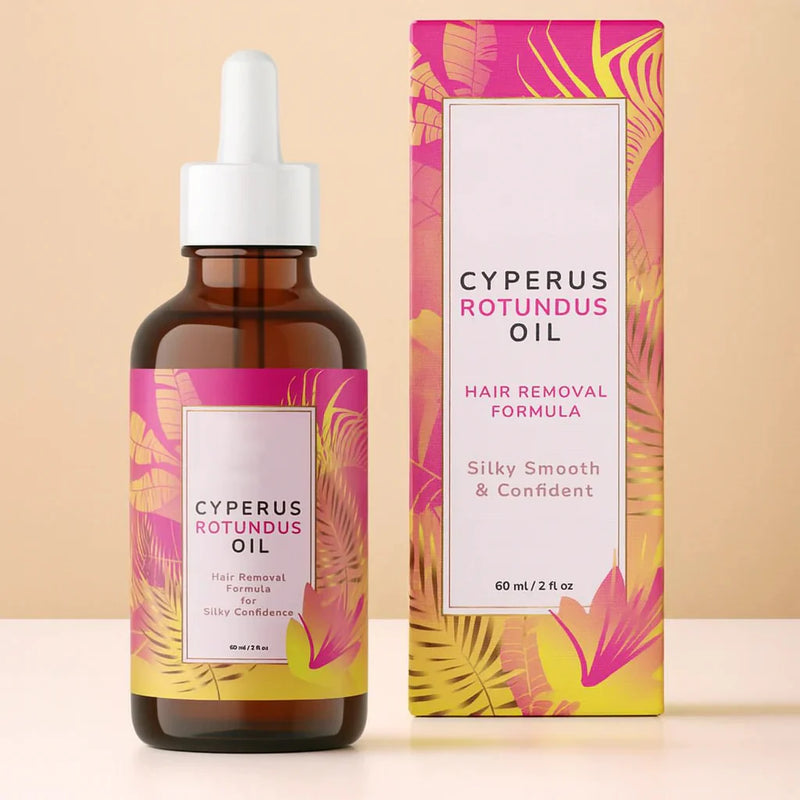
Reaching the Follicle Where It Counts
Cyperus rotundus extract in a jojoba carrier for maximum follicle-level penetration. Applied post-removal for best absorption.
See the ProductThe Role of Carrier Oils in Delivery
The sesquiterpenes in cyperus rotundus extract do not travel alone. They are suspended in carrier oils that affect how well they penetrate the skin and how they interact with the follicle environment. Carrier oil selection in a cyperus rotundus formula is not incidental. It directly impacts the delivery of the active compounds.
Jojoba oil is the closest match to human sebum in terms of molecular structure. It is technically a liquid wax ester, not a triglyceride like most oils, and this structural similarity to the skin's natural oils means the skin absorbs it without resistance. It forms a temporary pathway through the follicle channel that carries the cyperus rotundus compounds with it, delivering them closer to the follicle tissue than a heavier or less skin-compatible oil would.
Rosehip oil contributes linoleic acid, which supports the integrity of the follicle wall tissue and reduces the inflammatory response that can accompany hair removal. A less inflamed follicle is a more receptive follicle. By calming the post-removal environment, rosehip oil improves the conditions under which the cyperus rotundus compounds do their work.
Jojoba oil mimics human sebum structure, allowing it to travel through the follicle channel and carry cyperus rotundus compounds with it. This is not about hydration alone, it is about delivery vehicle.
Why Timing the Application Matters More Than You Think
The follicle is not equally receptive at all times. After hair removal, there is a window of approximately 24 to 48 hours during which the follicle channel remains open and the tissue is actively responding to signals in its environment. Apply the oil within this window and the active compounds reach the follicle wall. Wait until the follicle has started to close and the new hair shaft is forming, and the oil stays near the surface.
The first two hours after removal are the most productive. Many women apply the oil in the bathroom immediately after shaving or as soon as the waxed area has been cleaned and cooled. This is the correct instinct. The earlier in the post-removal window, the better the follicle-level penetration, and the more pronounced the 5-alpha reductase inhibition effect.
Topical vs Oral: Why Local Application Wins Here
5-alpha reductase inhibitors taken orally, like finasteride for hair loss treatment, work systemically. They reduce DHT levels throughout the body, including the scalp, which is why they address androgenic hair loss. But systemic 5-AR inhibition comes with the possibility of systemic effects, which is why oral finasteride is prescription-only and subject to medical supervision.
For hair removal applications, you do not want systemic 5-AR inhibition. You want localized inhibition in specific zones where you are removing hair. A topical oil applied to your bikini line after waxing affects the follicles in your bikini line. It does not circulate to your scalp. It does not affect your hormonal balance. The action is confined to the tissue it contacts, which is both safer and more targeted than any oral approach could be.
This is the structural advantage of topical cyperus rotundus oil over pharmaceutical alternatives. The mechanism is the same, the delivery is local, and the result is follicle-specific inhibition in exactly the zones you want to manage, with no systemic exposure.

Follicle Inhibition Where You Want It
Cyperus rotundus oil acts topically, not systemically. Safe for all zones, no hormonal effects, no prescription required.
See the ProductThe Biological Reason Each Cycle Gets Better
Hair follicles have memory in a functional sense. Each time the follicle completes a cycle under the influence of reduced 5-AR activity, it enters the next anagen phase from a slightly less vigorous starting point. The follicle tissue itself adapts to the repeated inhibitory signal. The result is a progressive shift: cycle 1 shows modest slowing, cycle 3 shows a more significant change, and cycle 5 and beyond often shows results that approach what many women were hoping for from the start.
This cumulative biology is why the oil's instructions specify ongoing application through multiple cycles rather than a one-time intensive treatment. Stopping after cycle 2 because the results are not yet dramatic means stopping before the follicle has had enough cycles to adapt fully. The follicle biology rewards patience and consistency with progressively better results.
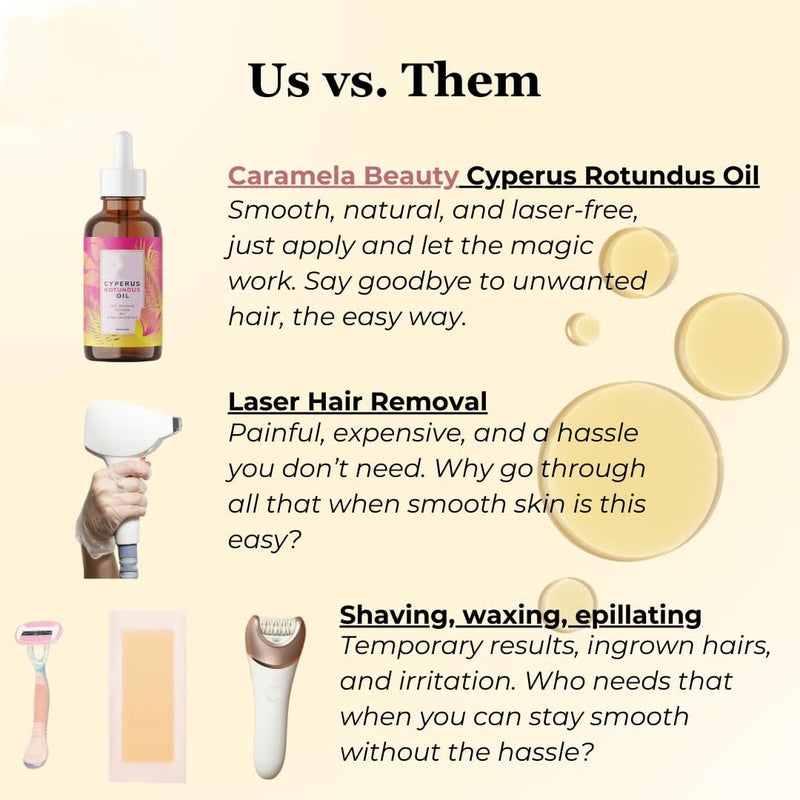
Progressive Follicle Inhibition
Each application adds to the last. Cyperus rotundus oil builds results over time, working with your follicle biology rather than against it.
See the Product