

Ultrasonic Electric Tooth Cleaner: Electric vs Manual, Which Wins?
Every cleaning method compared honestly: what each one does, where it falls short, and which combination wins.
The question is not really electric versus manual. It is about which tools address which problems, and whether the electric option solves something your current routine does not. The honest comparison is more nuanced than most product marketing suggests.
Manual Brushing: The Foundation That Cannot Be Replaced
Manual brushing with correct technique is genuinely effective at removing fresh plaque. The soft bristles, guided at a 45-degree angle to the gum margin using short circular strokes, disrupt the bacterial biofilm that forms on tooth surfaces throughout the day. At 2 minutes, twice daily, with a soft-bristled brush, most accessible tooth surfaces are cleaned adequately.
The problem is not manual brushing's effectiveness in principle. It is human technique variability in practice. Research consistently shows that the average adult brushes for under 50 seconds and applies twice the recommended pressure. Horizontal scrubbing strokes (the most common technique error) clean the broad flat surfaces of front teeth adequately but miss the gum margin, interproximal areas, and back molars where plaque accumulates fastest.
Manual brushing also cannot remove calculus. Once plaque mineralizes into tartar, no amount of brushing dislodges it. The bristles simply slide over the hardened deposit, leaving it in place.
The clinically recommended angle for manual brushing is 45 degrees to the long axis of the tooth, angled toward the gum margin. This positions the bristles to sweep plaque out of the sulcus as well as off the tooth surface. Most people brush horizontal to the tooth, which cleans the visible face but misses the gum line entirely.
Electric Toothbrushes: Real Improvement on Manual, Specific Limitations
Oscillating-rotating electric toothbrushes consistently outperform manual brushing in clinical studies for plaque removal. The oscillating head moves at speeds the human wrist cannot match, and the round head geometry guides users to work on one tooth at a time rather than sweeping across multiple teeth simultaneously. The result: more consistent contact with the gum margin and better coverage of each surface.
Sonic electric brushes add a secondary mechanism: the rapid side-to-side vibration creates fluid dynamics that disrupt plaque slightly beyond bristle contact, extending the cleaning radius by a few millimeters. This is meaningful at the gum line and in interproximal areas.
What electric toothbrushes do not do: remove tartar. The mechanism is still fundamentally abrasion and disruption of soft plaque. Electric brushing is better prevention than manual brushing, but once tartar has formed, neither type of brush addresses it.
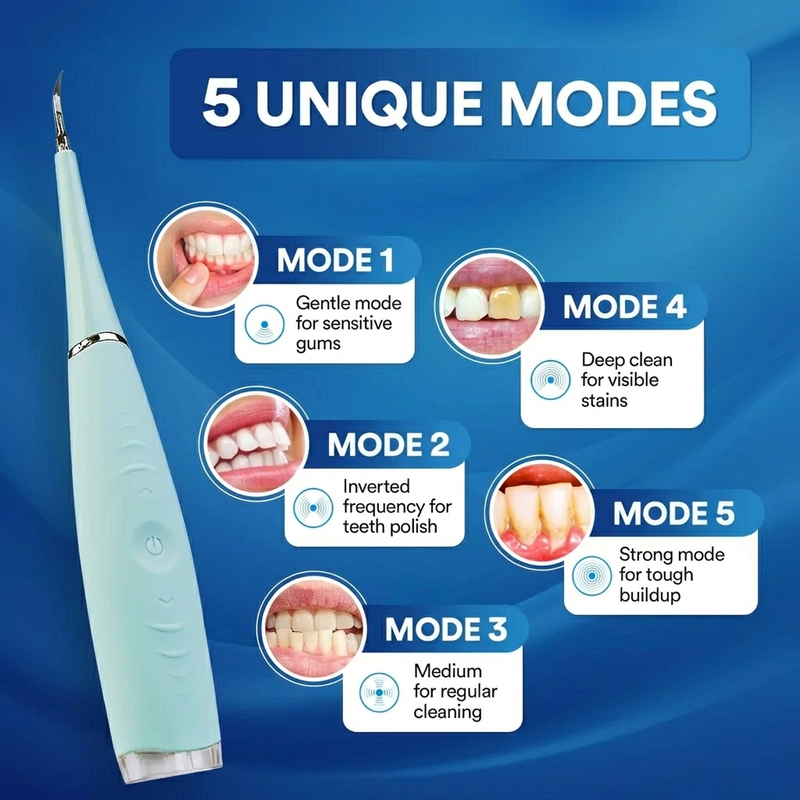
Ultrasonic Electric Tooth Cleaner
The method that removes what both manual and electric brushes leave behind. USB rechargeable, fine metal tip for calculus, flat tip for staining.
See the ProductManual Scalers: Effective in the Right Hands Only
The metal dental scaler does remove calculus. In trained hands, the sharp tip angled correctly against the tooth surface can fracture and dislodge tartar deposits mechanically. This is why professional cleanings use them.
In untrained hands, the risk-to-benefit calculation changes completely. The technique required to use a scaler safely, specifically the controlled lateral stroke with correct blade angulation, takes months of supervised practice to develop. Without it, users apply downward pressure rather than lateral pressure, use incorrect angles that bring the sharp edge in contact with root cementum rather than just the tartar, and lose control of strokes that catch the gum margin.
Manual scaling at home is not recommended for general consumers. The tool category works; the application context does not.
Ultrasonic Electric Cleaners: What Changes the Equation
The electric ultrasonic tooth cleaner introduces a mechanism that neither toothbrushes nor manual scalers share: vibrational energy transmission that fractures calculus without requiring precise blade angles or scraping force. The operating principle is acoustic rather than mechanical.
Calibrated vibrations at the tip transmit energy into the crystalline tartar deposit. The crystal lattice of calculus, like most mineral crystals, has structural weak points at its adhesion interfaces. Sustained vibrational energy at the right frequency causes these points to fracture, allowing the deposit to detach from the enamel without the tip needing to exert cutting pressure. The enamel itself, being harder than the tartar and structured differently, does not respond the same way to these frequencies at home-grade power levels.
The technique requirement is dramatically lower than for manual scaling. Angle matters less because you are transmitting energy rather than cutting. Pressure is not a positive variable; lighter contact actually produces better energy transfer than pressing. The main skill is patience: slow, overlapping strokes that allow the vibrational energy to penetrate the deposit rather than hurrying across the surface.
Each method in a complete routine covers a different gap. Manual or electric brushing removes daily fresh plaque. Flossing addresses interproximal surfaces. Ultrasonic cleaning addresses already-mineralized deposits. The combination covers all three problems. Choosing between them is a false choice.
Electric brushes clean better than manual. Neither removes tartar. That requires a different mechanism entirely.
Stain Removal: The Comparison
Electric toothbrushes with polishing heads remove surface staining moderately well, better than manual brushing because the abrasive action is more consistent and covers more surface area per stroke. Whitening toothpastes amplify this effect by adding fine abrasive particles, at the cost of some enamel microabrasion over time with heavy use.
Ultrasonic cleaning removes staining through a different mechanism: the vibration disrupts the acquired pellicle and the stained early calculus deposits simultaneously. The result is often comparable visually to whitening paste, achieved without abrasion. The staining also returns more slowly after ultrasonic removal because the stain anchor (tartar and pellicle) is gone rather than just bleached.
For heavy intrinsic staining (discoloration within the dentin layer), neither method is sufficient; this requires peroxide-based bleaching. But for the everyday chromogenic staining from coffee, tea, and wine that most people care about, ultrasonic cleaning matches or exceeds the cosmetic results of whitening toothpastes without the enamel abrasion tradeoff.
Battery and Maintenance Comparison
High-end electric toothbrushes typically run 2 to 3 weeks between charges with twice-daily use. Quality ultrasonic cleaners with 200-plus uses per charge last 3 to 6 months between charges at 2 to 3 sessions weekly. The ultrasonic device requires less maintenance attention because the usage interval between charges is longer and the tip replacement schedule is measured in months rather than the bristle head replacement cycle of 3 months for electric brushes.
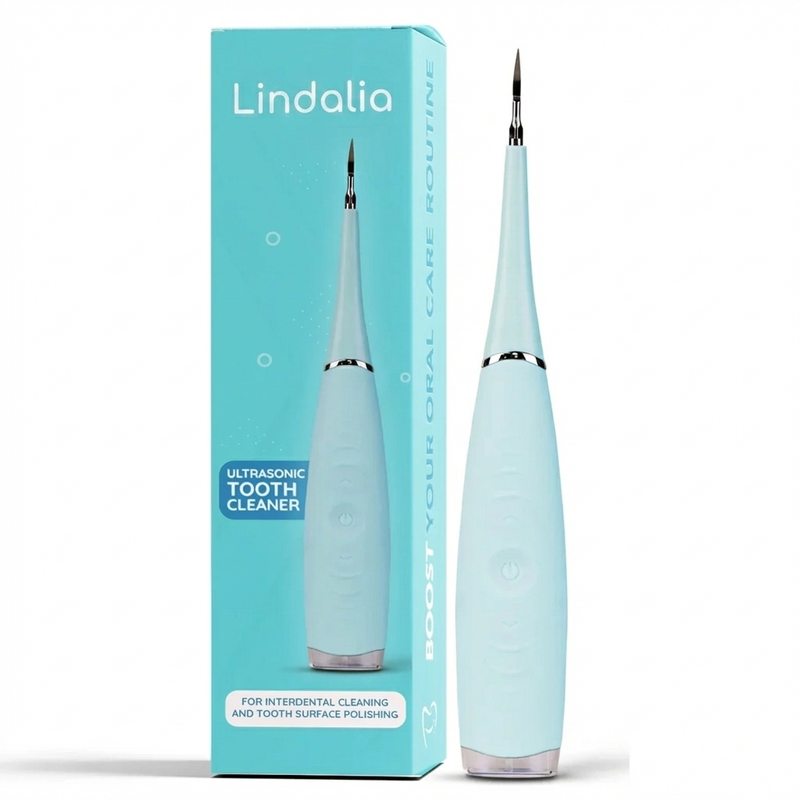
Lindalia Ultrasonic Tooth Cleaner
The electric tool that does what your toothbrush cannot. USB rechargeable, multiple modes, fine metal tip for calculus disruption.
See the ProductThe Verdict
Electric toothbrushes win on fresh plaque removal compared to manual brushing for most users. For tartar removal, neither electric nor manual toothbrushes score at all. The ultrasonic electric cleaner wins on tartar disruption and non-abrasive stain removal, and it has no meaningful competition in those specific categories within the at-home tool range.
The practical answer for most adults: use a good electric toothbrush for daily brushing, floss daily, and add an ultrasonic cleaner 2 to 3 times per week. These tools complement rather than compete with each other. Each addresses a specific failure mode in at-home oral care, and the combination closes most of the gap between professional and at-home results.
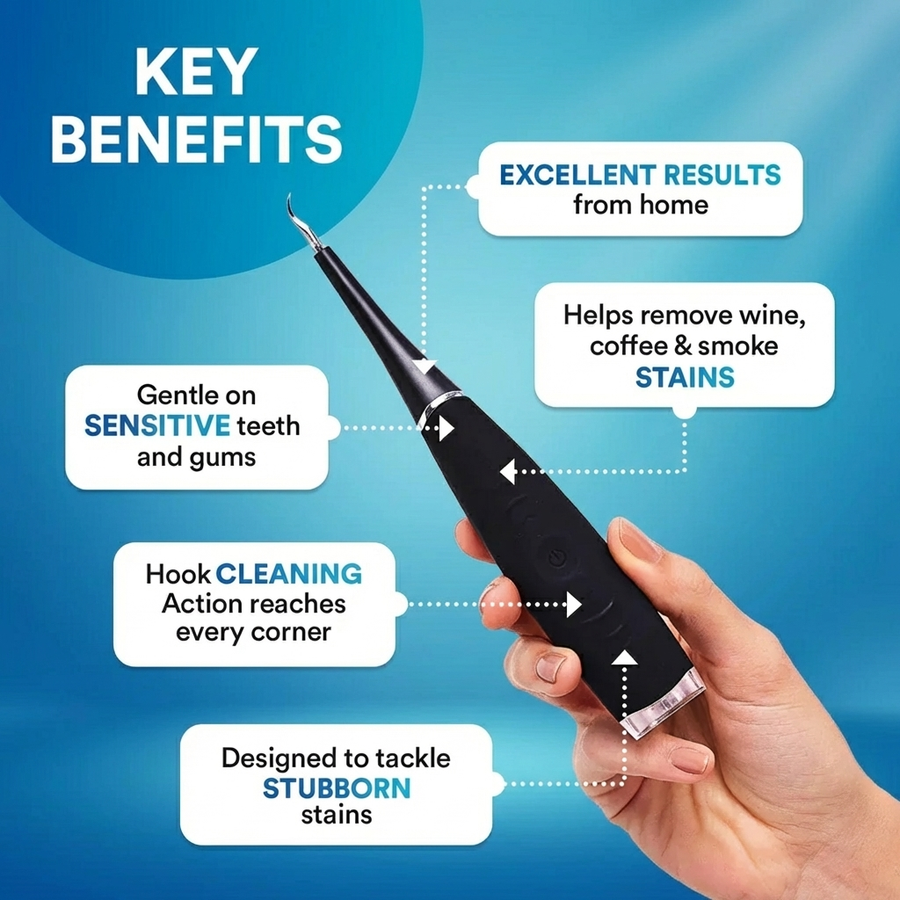
Lindalia Ultrasonic Tooth Cleaner
The missing layer in most electric brushing routines. Fine tip for tartar, flat tip for stains. Works in 2 to 3 minutes per session.
See the Product