

Ultrasonic Tooth Cleaner: How It Works and Why Dentists Recommend It
The science behind vibrations, cavitation, and why this technology is now accessible outside the dental office.
You sit in the dentist's chair, that metal instrument scrapes across your teeth, and within minutes, years of buildup vanish. What if you could get a version of that at home, without the appointment, without the bill, and without the anxiety? That is exactly what ultrasonic tooth cleaning technology was designed to do.
The Physics Behind the Clean
A conventional metal scaler works through mechanical force: you press, you scrape, you dislodge. Ultrasonic devices work on a completely different principle. They generate rapid vibrations at frequencies far above what the human ear can detect, and those vibrations do the work instead of brute pressure.
In a professional clinical setting, dental ultrasonic scalers typically operate between 25,000 and 45,000 vibrations per second (25 to 45 kHz). At those frequencies, the tip does not need to push hard against the tooth surface. Instead, the microscopic back-and-forth motion breaks the crystalline structure of tartar at a molecular level, causing it to crack and detach from the enamel rather than being scraped off layer by layer.
A second effect, called cavitation, adds to the cleaning power. The vibrating tip agitates the water or saliva around it, creating tiny bubbles that implode on contact with plaque and bacterial biofilm. These micro-implosions disrupt bacterial cell walls and flush debris out of spaces a bristle never reaches, including the tight margin where the gum meets the tooth.
Cavitation is the same physical phenomenon that industrial ultrasonic cleaners use to strip contamination off metal parts in manufacturing. The difference in dental applications is scale: the energy is precisely calibrated to target the bond between tartar and enamel, not the enamel itself.
Home Devices vs. Professional Scalers: The Key Difference
Here is where it matters for you as a consumer. Professional ultrasonic scalers run at the high end of that 25 to 45 kHz range, with output power designed for a trained clinician who knows exactly how long to linger on a given spot, how much pressure to apply, and which angles to use on which surfaces. In untrained hands, that power level could damage gum tissue or stress microfractures in enamel if used incorrectly.
At-home ultrasonic devices use lower frequencies and reduced amplitude, typically operating below the clinical threshold. The vibrations are still strong enough to fracture and dislodge soft calculus (early-stage tartar deposits) and surface stains from coffee, tea, wine, and tobacco, but the margin for error is wider. The tip does not dig; it barely grazes the surface while the physics do the work.
This calibration is intentional, not a compromise. Enamel, which is the hardest tissue in the human body at around 5 on the Mohs hardness scale, is significantly harder than tartar, which typically measures 3 to 4 on the same scale. A correctly calibrated home device targets that difference, loosening the softer deposit without touching the harder surface beneath it.
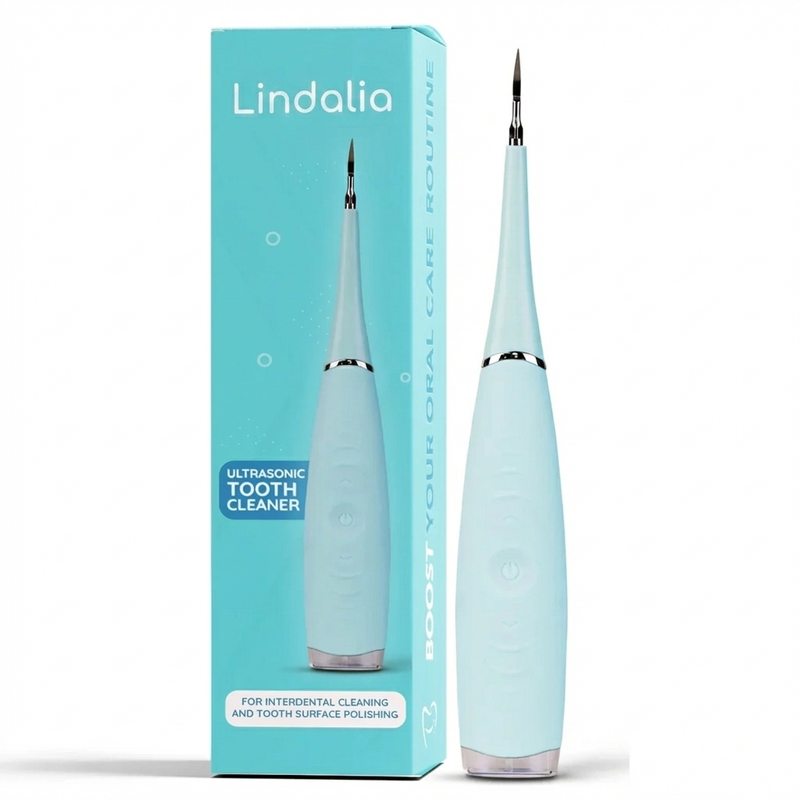
Ultrasonic Tooth Cleaner by Lindalia
USB rechargeable, multiple intensity modes, LED light, and interchangeable tips. Designed for safe, effective at-home use between dental visits.
See the ProductWhy Tartar Forms in the First Place
To understand why ultrasonic cleaning works, it helps to understand what you are actually fighting. Dental plaque is a soft, sticky film of bacteria that forms on teeth within hours of brushing. Left undisturbed, it starts mineralizing in as little as 24 to 72 hours, as calcium and phosphate from saliva bind to the bacterial matrix and harden it into calculus, which is the clinical term for tartar.
Once mineralized, plaque cannot be removed by a toothbrush. The crystals lock it to the tooth surface. Regular brushing removes fresh plaque before it hardens, but virtually no adult brushes with enough frequency, angle, and duration to catch 100% of it every cycle. The result: almost all adults have some degree of calculus buildup, and the inner surfaces of the lower front teeth (where the sublingual salivary glands deposit mineral-rich saliva) are the first to accumulate it.
This is why professional cleanings exist, and it is also why a home ultrasonic device has a real role to play. It cannot replace a full professional debridement for heavy accumulations, but it can significantly slow the rate at which new deposits harden and deepen between visits.
Use your device on the inner surface of your lower front teeth first. That is where sublingual saliva pools and where calculus mineralizes fastest. Spending an extra 30 seconds here at each session makes a measurable difference over weeks.
The Role of Ultrasonic in Stain Removal
Staining and tartar are related but not identical problems. Chromogenic compounds from coffee, black tea, red wine, and tobacco adhere to the acquired pellicle, which is the thin protein film that coats teeth within minutes of cleaning. Over time, those stains penetrate into surface irregularities in the enamel and bind to tartar deposits, which are inherently porous and absorb color readily.
The vibrational action of ultrasonic cleaning dislodges both the stained pellicle and the surface layer of discolored calculus without the abrasive action of whitening toothpastes. Abrasive whitening products remove stains by physically sanding the enamel surface, which works but thins the enamel over time with heavy use. Ultrasonic action is non-abrasive: the vibration breaks the adhesion between the stain compound and the tooth surface, and the rinsing action carries it away.
The vibration does not scrape the tooth. It breaks the bond between the deposit and the enamel, then lets physics do the rest.
What Dentists Actually Recommend and Why
The conversation around at-home ultrasonic devices within the dental profession has shifted noticeably. The concern was never about the technology itself, ultrasonic cleaning is a standard of care in professional practice. The concern was about unskilled users applying too much pressure, lingering too long, or using devices with excessive power output near compromised enamel or recent dental work.
Home-grade devices have addressed most of these concerns through design. Pressure-sensitive modes stop or reduce vibration when the user presses too hard. Multiple intensity settings allow gradual introduction. The tip geometry for consumer devices is rounded and smooth rather than the sharpened steel scalers used clinically.
Many general dentists now actively suggest that patients with a tendency toward rapid calculus buildup, typically those who see significant deposits forming within 3 to 4 months of a cleaning, incorporate a home ultrasonic device into their weekly routine. The goal is not to replicate the professional cleaning but to slow the rate of mineralization so that professional cleanings address less buildup and become more about thorough polishing than heavy scaling.
For patients with bonding, veneers, or ceramic crowns, the calcibrated home-grade devices are generally considered safe because the energy output is below the threshold that would stress porcelain or composite resin. That said, anyone with significant restorative work should confirm with their provider before starting any new tool.
Getting the Most Out of Your Device
The technique is simpler than it sounds. Hold the tip at a low angle to the tooth surface, nearly flat, not perpendicular. Use the lightest possible contact: the tip should barely graze the enamel. Move slowly across the surface rather than holding still in one spot. Two to three minutes per session, two to three times per week is the evidence-supported frequency for maintenance cleaning.
Start on the lowest intensity setting and increase only if you feel comfortable after several sessions. The lower molars and inner surfaces are the priority. The outer surfaces of front teeth accumulate less calculus but are where staining is most visible, so spend equal time there for cosmetic results.
Rinse the tip thoroughly after each use and allow it to air dry. Mineral deposits from tap water can accumulate on the tip and reduce vibration efficiency. For hard water areas, a quick soak in diluted white vinegar once a week keeps the tip functioning at full capacity.
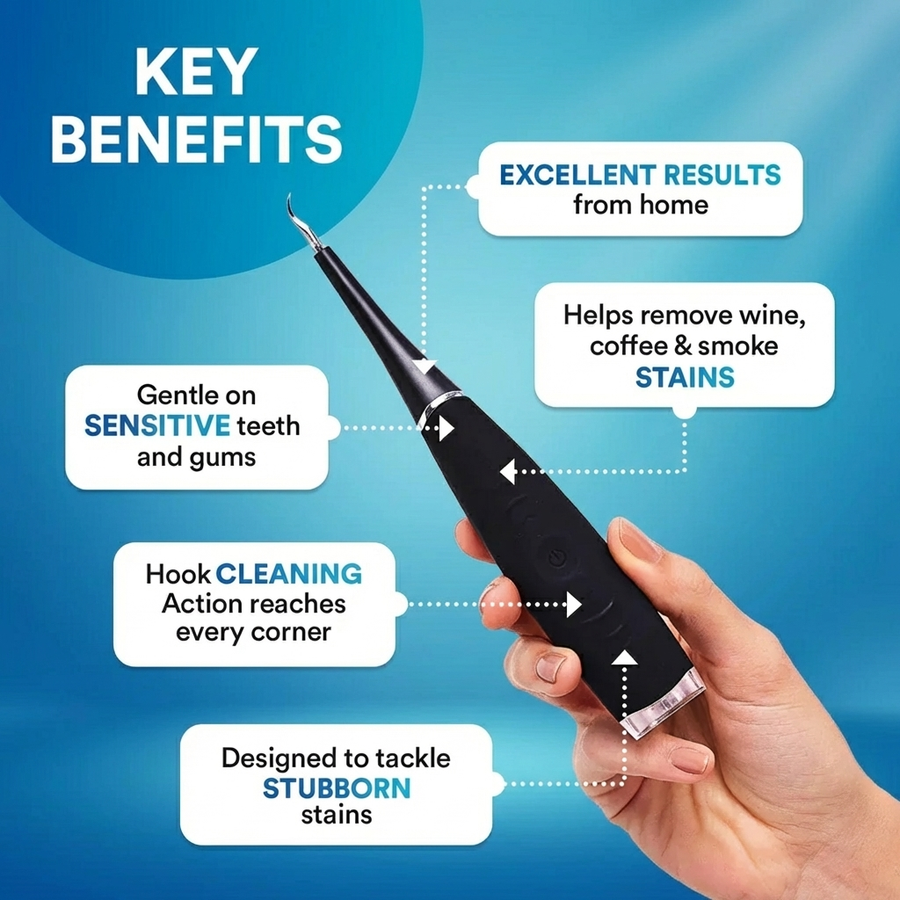
The At-Home Ultrasonic Solution
Pen-sized, USB rechargeable with 200+ uses per charge. Safe for bonding, veneers, and crowns. The maintenance tool your teeth actually need.
See the ProductThe Honest Limitations
No home device removes heavy, long-standing subgingival calculus, which is tartar that has formed below the gum line. That type of buildup requires a professional instrument with the angulation and power to reach into the sulcus, the space between tooth and gum, safely. If you have not had a professional cleaning in more than a year, or if your gums bleed consistently, a professional visit is the correct first step before beginning any at-home maintenance routine.
Home ultrasonic devices are maintenance tools, not replacement tools. Used consistently, they keep the rate of new calculus formation lower, make professional cleanings faster and less uncomfortable, and address surface staining that ordinary brushing cannot touch. That is a meaningful benefit that compounds over time.
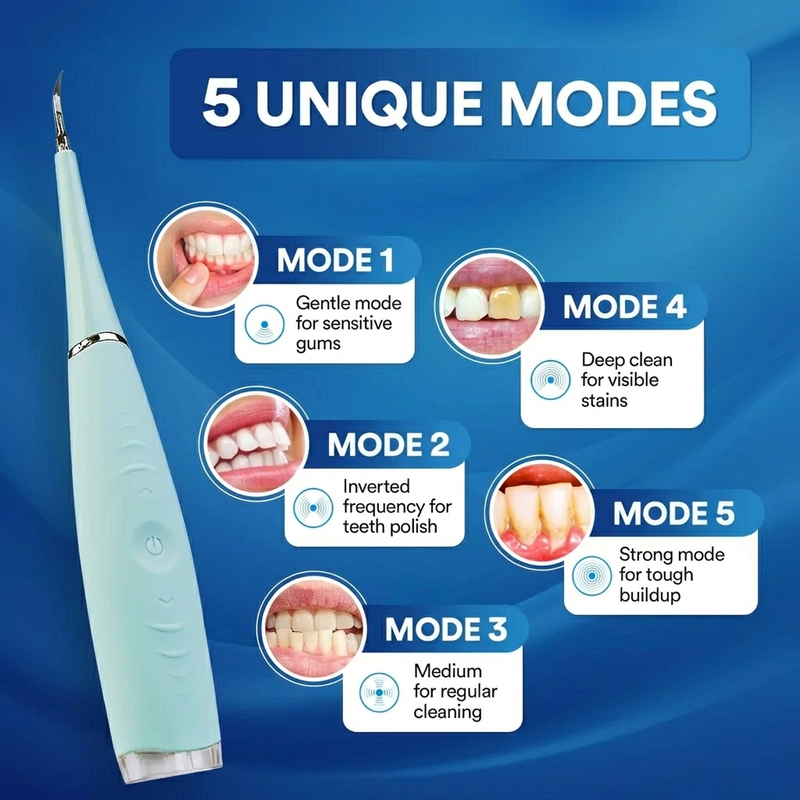
Lindalia Ultrasonic Tooth Cleaner
Multiple intensity modes, LED light, and two interchangeable tips. Everything you need for effective at-home dental maintenance.
See the Product