

Ultrasonic Tooth Cleaner Reviews: What Real Users Are Saying
Coffee drinkers, smokers, dental-anxious adults, and long-term users. The unfiltered picture.
Product pages look good. The real signal is in what happens three months later, when the initial excitement is gone and the device either earns a permanent spot in the bathroom cabinet or disappears into a drawer. Real feedback across different user profiles tells a more useful story than any specification sheet.
The Heavy Coffee and Tea Drinker
This is probably the most common profile among first-time buyers of at-home ultrasonic devices. Surface staining from tannin-rich beverages is the visible problem that prompts the purchase. The frustration is consistent: daily brushing does not prevent yellowish-brown buildup on the inner surfaces of lower front teeth, and professional cleanings cost significantly more than a home device.
Feedback from this group is generally positive and relatively fast. Users typically report visible stain reduction within 2 to 4 weeks of consistent use (2 to 3 sessions per week). The mechanism makes sense: tannin stains bind to the porous surface of early tartar deposits and to the acquired pellicle. The vibrational action disrupts both the pellicle and the early calculus simultaneously, removing the stain along with its anchor.
The caveat that appears consistently in long-term feedback: the staining returns faster than expected if the underlying calculus is not addressed. Coffee drinkers who use the device only on visible staining but do not spend adequate time on the inner lower surfaces (where calculus formation is fastest) find themselves repeating the visible cleaning cycle without addressing the structural issue beneath it.
Tannin stains bond to tartar and pellicle. Removing only the stain without addressing the calculus beneath means new staining returns faster, because fresh pellicle adheres readily to the rough surface of remaining deposits. The more complete the calculus removal, the slower staining returns.
The Smoker and Former Smoker
Tobacco use creates a specific and more challenging staining and deposit pattern than coffee or tea. Cigarette smoke contains tar compounds and chromogenic particles that penetrate deeper into enamel surface irregularities and bond with significantly higher adhesion strength than beverage-based stains. Additionally, tobacco users tend to develop calculus somewhat more rapidly due to changes in salivary pH and composition.
Feedback from current smokers using at-home ultrasonic devices is more mixed than from the coffee-drinker group. Lighter smokers (under 5 cigarettes daily) report reasonable stain improvement comparable to coffee drinkers over 4 to 6 weeks. Heavier smokers typically find that home devices manage the rate of stain accumulation but do not fully reverse heavy existing deposits, which have had time to penetrate beyond surface level.
The common observation from this group: using the device consistently as a maintenance tool, rather than expecting a dramatic single-session reversal of years of staining, leads to better outcomes. When combined with professional cleaning to establish a clean baseline, the home ultrasonic device genuinely extends the interval before visible staining becomes noticeable again.
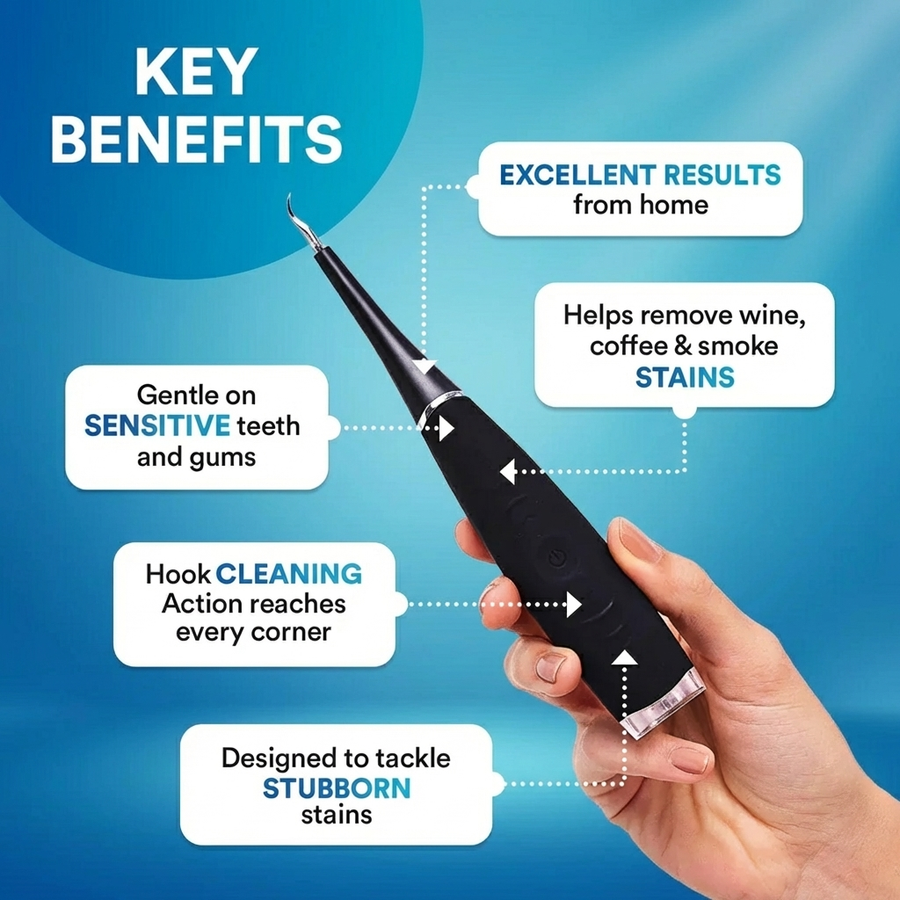
Ultrasonic Tooth Cleaner by Lindalia
Non-abrasive vibrational cleaning removes coffee, tea, wine, and tobacco stains without wearing down enamel. USB rechargeable, pen-sized for daily use.
See the ProductThe Dental-Anxious Adult
This profile is underrepresented in marketing but extremely relevant. A significant portion of adults avoid or delay professional dental cleanings specifically due to anxiety around the scaling process: the sounds, the metal instrument, the sensation of scraping. The result is longer intervals between cleanings, more accumulated buildup, and more uncomfortable cleanings when they do happen, which reinforces the avoidance pattern.
Feedback from dental-anxious users who adopt home ultrasonic devices is among the most consistently positive across all profiles. The connection is straightforward: less buildup at each professional cleaning means shorter, less invasive appointments. Users who maintain consistent home ultrasonic routines for 6 months or more consistently report that their subsequent professional cleanings took significantly less time and were notably less uncomfortable.
One recurring observation from this group: the initial sensation of the home device is unfamiliar but controllable, which is the critical difference from a dental chair. The ability to stop immediately, adjust intensity, and proceed at their own pace makes the experience manageable for people who would be paralyzed with anxiety in a clinical setting. Several long-term users in this profile report that sustained home care has also reduced their dental-appointment anxiety over time, partly because each visit reveals less to address.
Users with dental anxiety consistently cite self-paced control as the key feature that makes home ultrasonic cleaning accessible to them. Unlike a clinical appointment, you choose when to start, when to pause, and at what intensity to proceed. For the anxious user, this autonomy is as important as the technical capability of the device.
The First-Time User: The Learning Curve
Almost every first-time user mentions the same adjustment period. The vibrational sensation transmitted through the tip is unlike anything else in a normal oral hygiene routine. On a first use at full intensity, it can feel uncomfortable or alarming, particularly on sensitive areas near the gum margin.
The pattern in feedback: users who start at the lowest setting and spend the first two sessions simply getting comfortable with the sensation report far higher long-term adherence than users who start at full power and have an unpleasant first experience. This is not about the device being unsafe at higher intensity. It is about the nervous system familiarizing itself with an unfamiliar sensation before it reads as neutral rather than alarming.
The practical advice from experienced users is consistent: treat the first three sessions as orientation, not cleaning. Move the tip gently around all surfaces at low intensity. By the fourth session, the sensation is familiar enough that you can focus on technique rather than the feeling.
The first three sessions are about getting comfortable. The results start showing up in week two.
Long-Term Users: What Changes After 6 Months
The most informative feedback comes from users who have maintained consistent use for 6 months or more. Several patterns emerge reliably. Professional cleanings become shorter: hygienists comment on noticeably less calculus buildup compared to prior visits. Surface staining accumulates more slowly between sessions. Gum bleeding during brushing and flossing reduces, likely because consistent removal of calculus at the gum margin reduces the chronic low-level inflammation that calculus deposits cause.
Some long-term users report stretching professional cleaning intervals from the standard 6 months to 9 or even 12 months with their dentist's agreement, because the baseline maintained at home reduces the urgency of professional debridement. This is not a recommendation to skip professional care, but it illustrates how consistent home maintenance changes the calculus accumulation curve meaningfully over time.
The users who abandon the device within 6 months share a common pattern: they purchased it expecting dramatic results on a single session and abandoned it when the change was gradual rather than immediate. Ultrasonic home cleaning is cumulative. The results compound over weeks and months, not days.
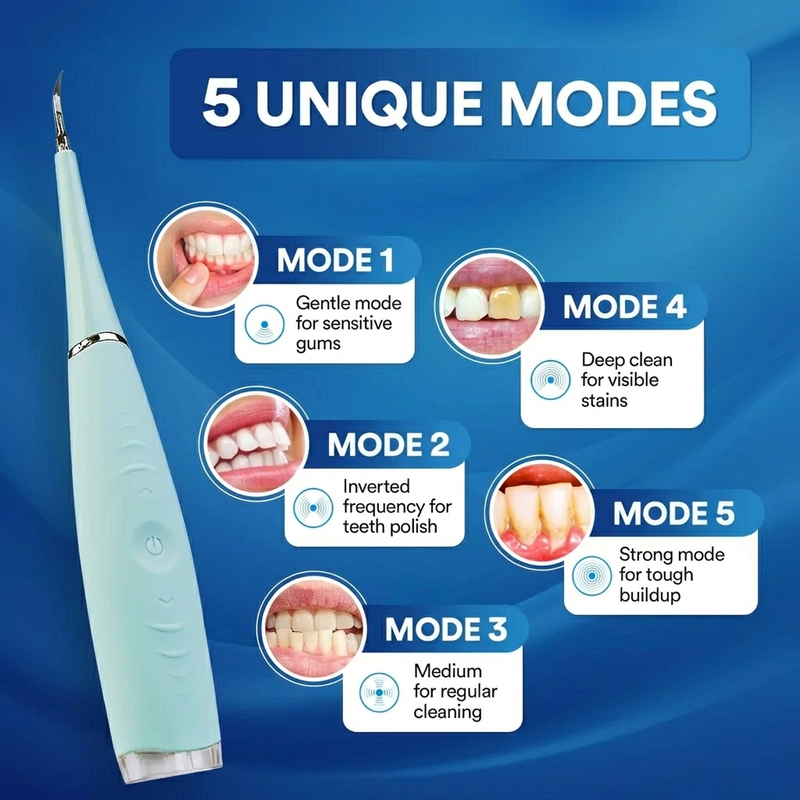
Lindalia Ultrasonic Tooth Cleaner
Multiple intensity modes for gradual introduction. LED light for visibility. 200+ uses per charge so it is always ready when you are.
See the ProductThe Honest Limitations: What Users Wish They Knew
The device does not whiten intrinsically stained teeth. It removes surface staining and the tartar that anchors it, but discoloration that has penetrated into the dentin layer (typically from years of smoking or tetracycline exposure) requires a bleaching agent. Users who expect whitening comparable to a whitening treatment and are disappointed are conflating two different problems.
The device does not reach subgingival deposits. If your gums bleed consistently at the gum margin, there is likely calculus below the gum line that a home device cannot reach. This is a limitation of the technology at home-safe power levels, not a flaw specific to any particular device. Professional care is still necessary for below-gum-line deposits.
Consistency is non-negotiable. Users who use the device for two weeks and then skip three weeks find the calculus they removed simply reforms. The goal is maintenance at a lower buildup threshold, not a one-time correction. Like brushing and flossing, the value is in the unbroken routine.
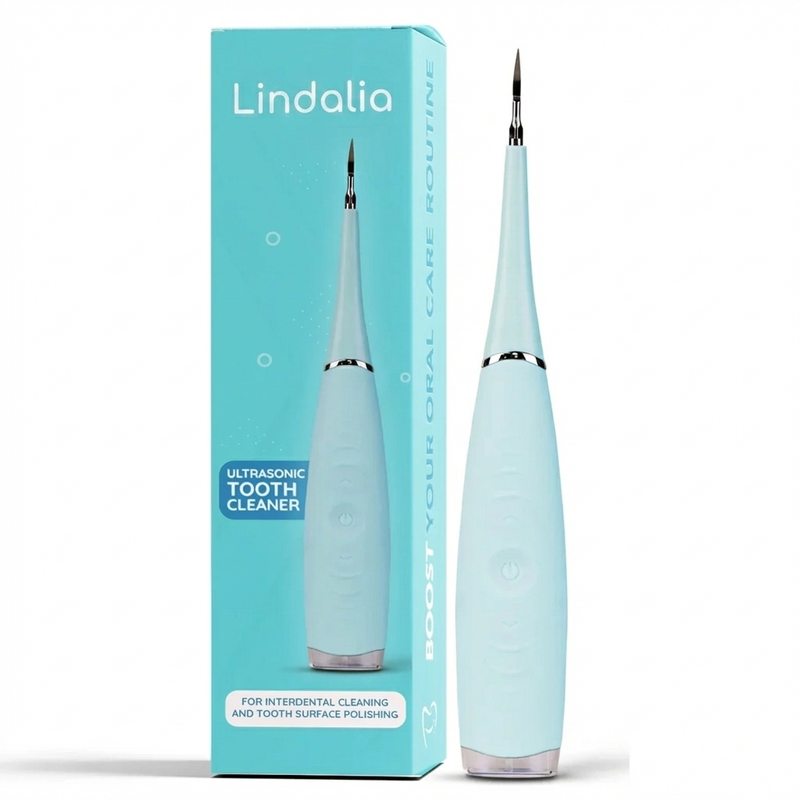
Lindalia Ultrasonic Tooth Cleaner
USB rechargeable, fine tip and flat tip included, multiple modes. The tool that changes what 'brushing enough' actually means.
See the Product