

Ultrasonic Tooth Cleaning: The At-Home Method That Actually Works
Brushing, flossing, water flossers, whitening strips. Here is what each one genuinely does, and where ultrasonic cleaning fits in.
Every pharmacy shelf promises a whiter, cleaner smile. Most deliver marginal results on surface stain and zero impact on actual tartar. Understanding what each method does and does not do is the only way to build a routine that makes a real difference.
The Baseline: What Regular Brushing Actually Does
Brushing removes fresh dental plaque when done correctly. The mechanical action of bristles against tooth surfaces disrupts the soft bacterial film before it has time to mineralize. For this to work, timing matters: plaque begins the mineralization process within 24 to 72 hours of forming, so consistent twice-daily brushing interrupts the cycle before calculus can form.
What brushing cannot do: remove tartar that has already hardened, reach the full depth of the gap between the tooth and gum, or access the contact points between adjacent teeth. Studies consistently show that brushing alone cleans roughly 60% of accessible tooth surfaces under ideal conditions. The other 40% requires additional methods.
Electric toothbrushes improve on manual brushing by increasing oscillations and reducing user technique variability. Sonic electric brushes add a fluid dynamics effect, where the rapid vibration creates secondary currents that clean slightly beyond bristle contact. But none of this removes calculus once it has formed.
Plaque mineralizes into early-stage calculus within 24 to 72 hours. This is why skipping brushing for even two consecutive nights consistently shows measurable new deposit formation at follow-up cleanings. Consistency, not intensity, is the key variable.
Flossing: Necessary, But One-Dimensional
Floss addresses the interproximal space, which is the contact area between adjacent teeth where the toothbrush cannot reach. Done correctly and daily, it removes the plaque accumulating between teeth before it hardens into the characteristic smooth, calcified bridge of tartar that dentists call ledge calculus.
Traditional string floss requires technique. Many users snap the floss into the gum rather than sliding it gently under the contact point, which causes bleeding and discourages consistent use. Floss picks and interdental brushes offer easier alternatives for different gap sizes. None of these address tartar that has already formed; they are prevention tools, not removal tools.
Flossing is non-negotiable in a complete routine. It does not replace anything; it covers a specific zone that nothing else reaches adequately.
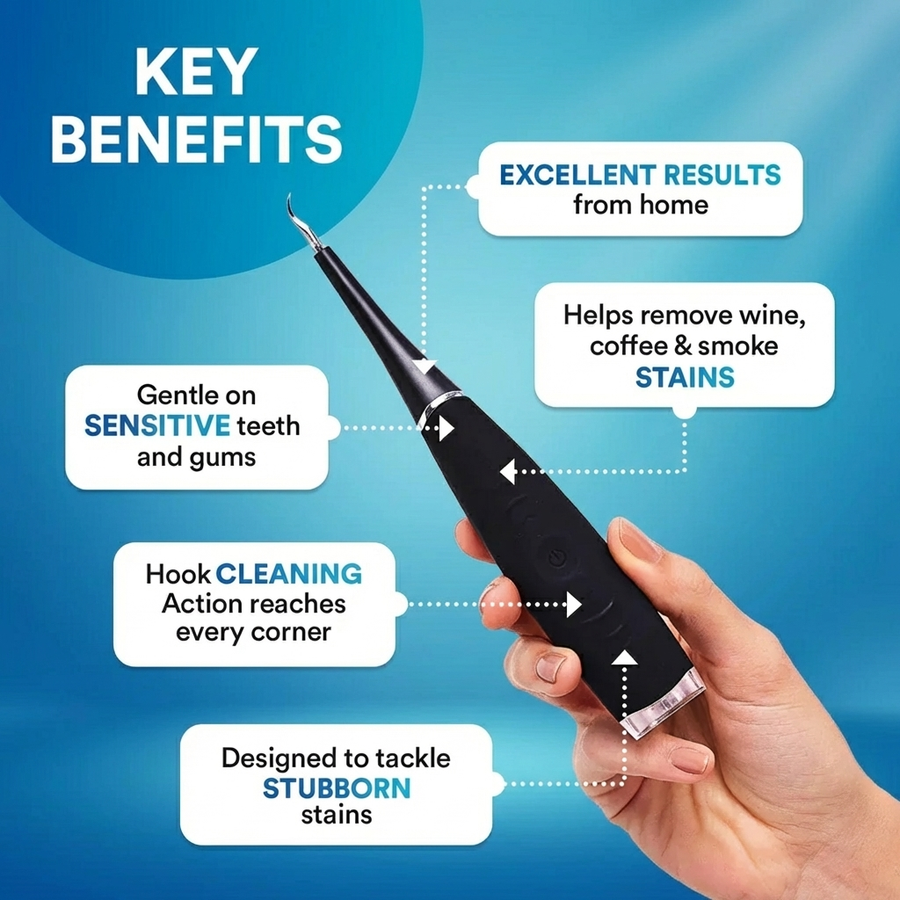
The Ultrasonic Tooth Cleaner
For what brushing and flossing cannot do. Ultrasonic vibrations break down mineralized tartar and surface stains at home, in under 3 minutes per session.
See the ProductWater Flossers: Strong on Gums, Limited on Tartar
Water flossers use a pulsed stream of water to flush the sulcus (the groove between tooth and gum) and interproximal spaces. For gum health, they are genuinely effective: the flushing action removes food debris and disrupts soft plaque in areas floss cannot reach, and the pulsation has a mild massage effect on gum tissue that improves circulation.
For tartar removal, water flossers have real limits. The water stream does not generate enough force to break the mineralized bond between calculus and enamel. It can remove soft plaque and loose debris around existing tartar deposits, but it does not dislodge them. The clinical evidence for water flossers as tartar removal tools is not strong. They are excellent adjuncts for gum health maintenance, not tartar-targeting tools.
Where water flossers shine: around orthodontic brackets, dental implants, and crowded areas where floss is physically difficult to navigate. For patients with gum disease history, the gum-flushing action is genuinely valuable. For tartar removal specifically, they fall short.
Whitening Strips: Surface Only, at a Cost
Whitening strips use peroxide compounds to bleach chromogens within the enamel structure. They work on intrinsic staining, the discoloration that has penetrated into enamel, not just the surface film. For genuine whitening, they are among the more effective over-the-counter options.
What they do not do: remove tartar, clean the gum line, or address the interproximal areas. The strip only contacts the front face of the tooth. And the repeated peroxide exposure, while generally safe within recommended usage, can increase tooth sensitivity in people who already have thin or compromised enamel.
Whitening strips are cosmetic tools. They brighten the visible surface of front teeth. They have no impact on the structural cleanliness of your dentition.
Surface stains from coffee and tea bond to the protein pellicle and to the porous surface of tartar deposits. Whitening strips bleach the discoloration. Ultrasonic vibration removes the stained pellicle and the tartar itself. The results look similar in photos but the mechanism is fundamentally different, and the ultrasonic result lasts longer because the stain anchor (tartar) is gone.
Ultrasonic Cleaning: What It Does Differently
The fundamental difference with ultrasonic home cleaning is mechanism. Brushing is abrasion. Flossing is mechanical disruption. Water flossing is hydraulic pressure. Ultrasonic cleaning is vibrational energy transmitted directly to the bond between calculus and enamel.
Tartar is a crystalline mineral structure. Like most crystals, it responds to resonant vibration: the right frequency, applied long enough, causes the crystal lattice to fracture at its weakest points, which are the adhesion interfaces between calculus and tooth surface. The vibrating tip does not need to scrape; it needs to transmit energy into the deposit until it detaches.
This is why at-home ultrasonic devices are effective for early-stage and moderate calculus that has not yet deeply infiltrated below the gum line. The method does not compete with brushing or flossing; it addresses the specific limitation that neither can address: removal of already-mineralized deposits.
Brushing prevents tartar. Ultrasonic vibration removes it. These are different jobs, and both matter.
Building the Routine That Covers Every Base
The most effective at-home oral hygiene routine layers each method by function. Brush twice daily to remove fresh plaque before it mineralizes. Floss once daily to address interproximal plaque. Use an ultrasonic device two to three times per week to break down early calculus deposits and surface staining before they accumulate. Add a water flosser if you have implants, orthodontic work, or chronic gum issues.
This is not about buying more products. It is about understanding that each tool solves a different problem, and no single product solves all of them. Brushing without addressing calculus means your dentist will always find significant buildup at your next cleaning. Using an ultrasonic device without brushing means fresh plaque accumulates rapidly and provides new calculus-forming material.
The sequence also matters. Floss first to loosen interproximal debris. Brush next to sweep away dislodged plaque. Use the ultrasonic device on areas of known calculus accumulation (inner lower front teeth, back molars near the gum line). Rinse thoroughly. Total time: under 6 minutes.
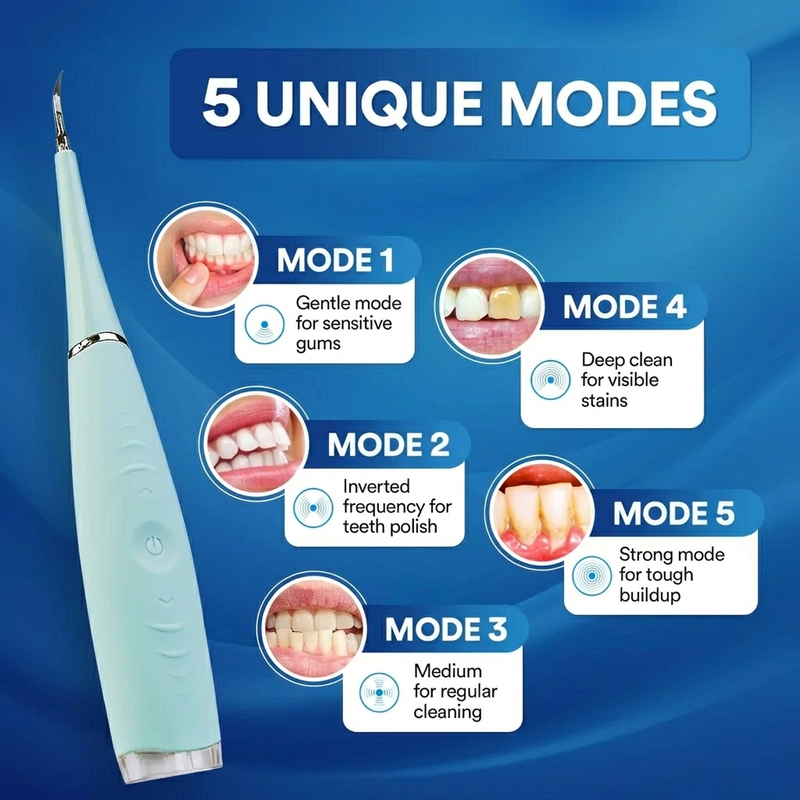
Ultrasonic Tooth Cleaner
Add the one method that actually removes what brushing and flossing leave behind. Safe for use on bonding, veneers, and crowns.
See the ProductWho Benefits Most
People who form calculus quickly, typically within 3 to 4 months of a professional cleaning, notice the most dramatic impact from adding an ultrasonic device to their routine. Heavy coffee, tea, or red wine drinkers see staining return rapidly and benefit from the non-abrasive stain removal mechanism. People who have reduced their dental visit frequency for financial or access reasons can meaningfully slow the progression of calculus buildup between appointments.
Those with braces, permanent retainers, or dental implants benefit from the tip's ability to reach areas that bristles and floss cannot navigate cleanly. And people who experience dental anxiety find that less buildup at each professional visit means shorter, less invasive cleanings, which reduces the stress of those appointments over time.
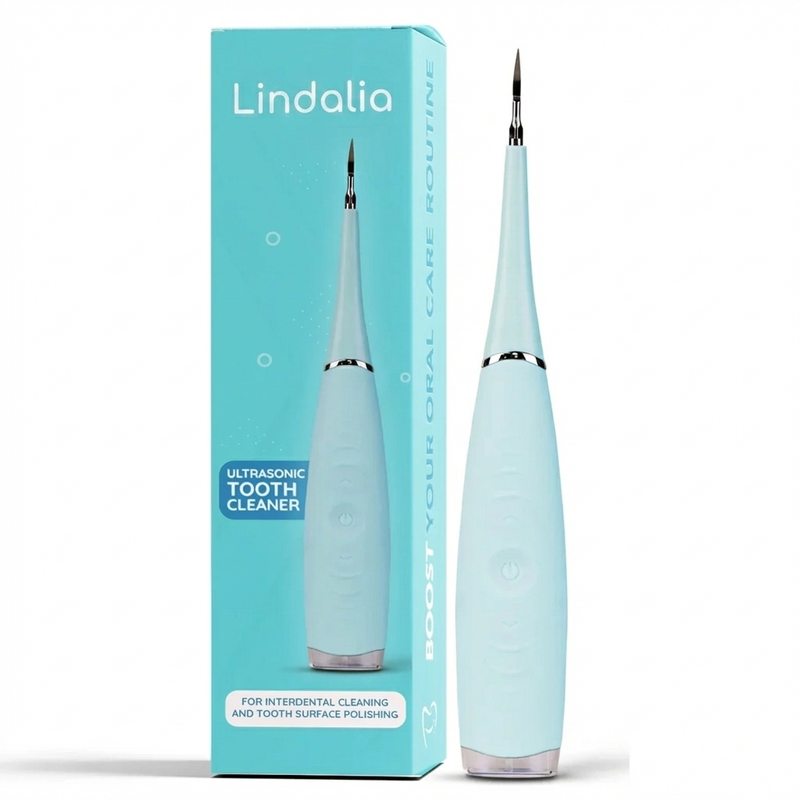
Lindalia Ultrasonic Tooth Cleaner
Pen-sized design, USB rechargeable, 200+ uses per charge. The missing piece in most at-home oral care routines.
See the Product