

Ultrasonic Tooth Cleaning Wand: The Tool That Replaces Your Scaler
Why the metal scaler is risky at home, and how the ultrasonic wand addresses the same problem without the technique barrier.
The metal dental scaler looks deceptively simple. A handle, a hooked metal tip, and it appears to do exactly what you want: scrape tartar off your teeth. The problem is that in untrained hands, it is one of the more reliably damaging tools you can use in your own mouth.
Why the Metal Scaler at Home Is a Bad Idea
In a clinical setting, the dental scaler is used with a specific technique: a controlled lateral stroke with the blade angled precisely to the tooth surface, maintained at a working angle of 45 to 90 degrees to the tooth axis. The clinician uses a modified pen grasp, a fulcrum finger for stability, and applies controlled lateral pressure, not downward pressure. This technique takes months of supervised practice to develop.
Most people who use a metal scaler at home press down on the tartar deposit and drag the tip across the surface. This concentrates force at a sharp metal edge against tooth and root surfaces in a way that causes several specific types of damage. The first is root gouging: if the tip slips below the gum margin or contacts an exposed root surface, the sharp metal edge can literally carve grooves into the root cementum, which does not regenerate. The second is gum laceration: the tip easily catches the gum margin and cuts the soft tissue, which heals but scars slightly and can contribute to gum recession over time. Third, uncontrolled pressure on a tartar deposit sometimes causes it to fracture in a way that drives a fragment into the gum sulcus rather than removing it cleanly.
Professional scalers are held with a modified pen grasp, fingertip only, with almost no squeezing pressure. Most people instinctively grip tools like a fist when working in their mouth. This alone multiplies the applied force by a factor that makes an accurate, safe stroke essentially impossible without training.
How the Ultrasonic Wand Works Differently
The ultrasonic wand removes the technique dependency that makes manual scalers risky. Instead of needing precisely angled, controlled strokes, the wand transmits vibrational energy into the tartar deposit through light contact. The tip does not need to press, angle, or scrape. The vibration does the work: it fractures the crystalline mineral structure of calculus at its bond with the tooth surface.
This fundamentally changes the risk profile. You cannot gouge a root surface with a vibrating tip held at the wrong angle, because you are not applying cutting pressure. You cannot slice the gum margin by losing control of the stroke, because there is no cutting stroke. The tip operates by energy transmission, not mechanical force. This is the core reason why home-grade ultrasonic devices are safe for general consumer use while sharp scalers are not.
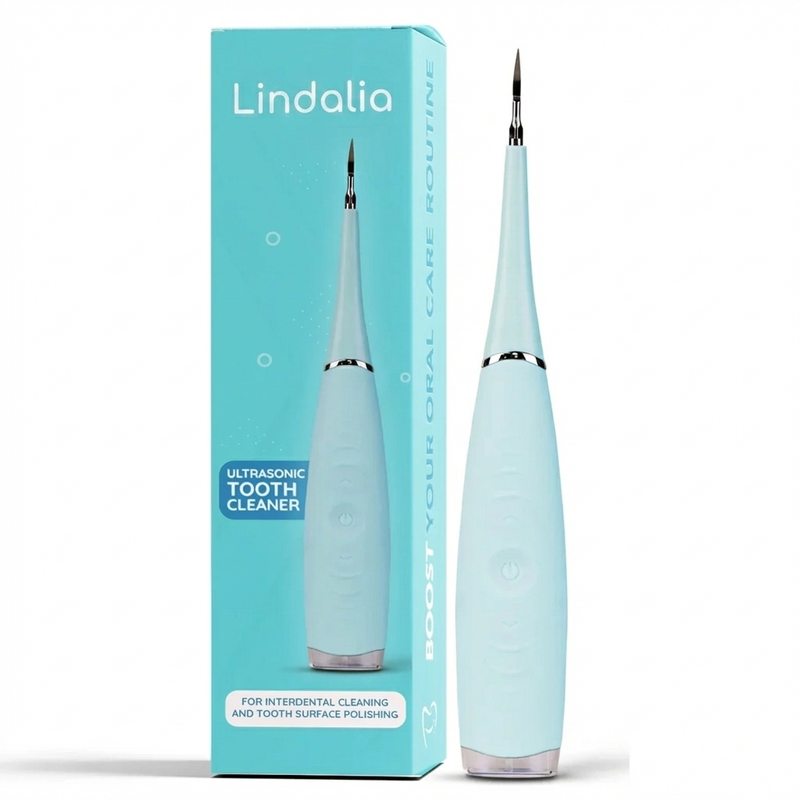
Ultrasonic Tooth Cleaning Wand
Vibration replaces blade pressure. No cutting strokes, no gouging risk. Safe for home use with LED visibility and multiple intensity modes.
See the ProductThe Wand's Practical Advantages
Beyond safety, the ultrasonic wand has several practical advantages over a manual scaler for home use. First, access: the wand tip can approach surfaces at nearly flat angles that are impossible with a hooked scaler. The inner surfaces of lower front teeth, which are the highest-priority areas for calculus removal, are easier to work on with a pen-sized wand than with an angled hook tool.
Second, simultaneous irrigation: the vibrating tip agitates the saliva and any water present, creating a mild cavitation effect that flushes disrupted debris away from the working area. A manual scaler simply dislodges deposits, which then sit in your mouth until you spit or rinse. The hydraulic cleaning effect of the ultrasonic wand is a meaningful quality-of-life improvement.
Third, sensitivity: users with dentinal hypersensitivity find the vibrational approach less painful than the scraping pressure of a metal scaler. The sensation is different and unfamiliar but does not concentrate sharp mechanical stress on sensitive areas the way a blade tip does.
What the Wand Cannot Do That the Professional Scaler Can
Honesty requires acknowledging the real limitations. The professional ultrasonic scaler in a dental office operates at significantly higher power, allowing the tip to reach several millimeters below the gum line to address subgingival calculus in the periodontal pocket. The at-home wand is calibrated at lower energy and with a rounded tip geometry that does not enter the sulcus effectively.
For supragingival calculus, which is calculus above the gum line, the home wand performs comparably to professional scaling for early to moderate deposits. For subgingival deposits, professional care is necessary. The honest use case for the at-home wand is maintenance and prevention: keeping supragingival buildup at a lower accumulation threshold so professional visits address less overall, and so subgingival deposits never reach the severity they would without home maintenance.
A professional cleaning removes all accessible deposits. Without home maintenance, new calculus begins forming immediately. With consistent wand use, the rate of re-accumulation slows measurably. At 6-month cleanings, the difference is visible to your hygienist.
The scaler requires technique. The wand requires consistency. One of those is learnable in a week.
Tip Design: What Makes a Good Wand Tip
Not all wand tips are equal. For effective tartar disruption, the fine metal tip is the critical component. The tip needs to be rigid enough to transmit vibrational energy without flexing, fine enough to access narrow interproximal spaces and the gum margin area, and smooth at the contact surface to avoid creating scratches on enamel.
Tips made from surgical-grade stainless steel strike this balance. Cheap alloy tips can flex during vibration, damping the energy transmission and reducing cleaning effectiveness. They can also corrode with repeated moisture exposure, introducing rough surface texture that can scratch enamel if the tip is used with manual pressure.
The flat disc tip, often included as a secondary tip with quality devices, performs a different function: it polishes and removes surface staining after the fine tip has disrupted the tartar deposit. Using both in sequence, fine tip first then flat tip, produces the most complete result at each session.
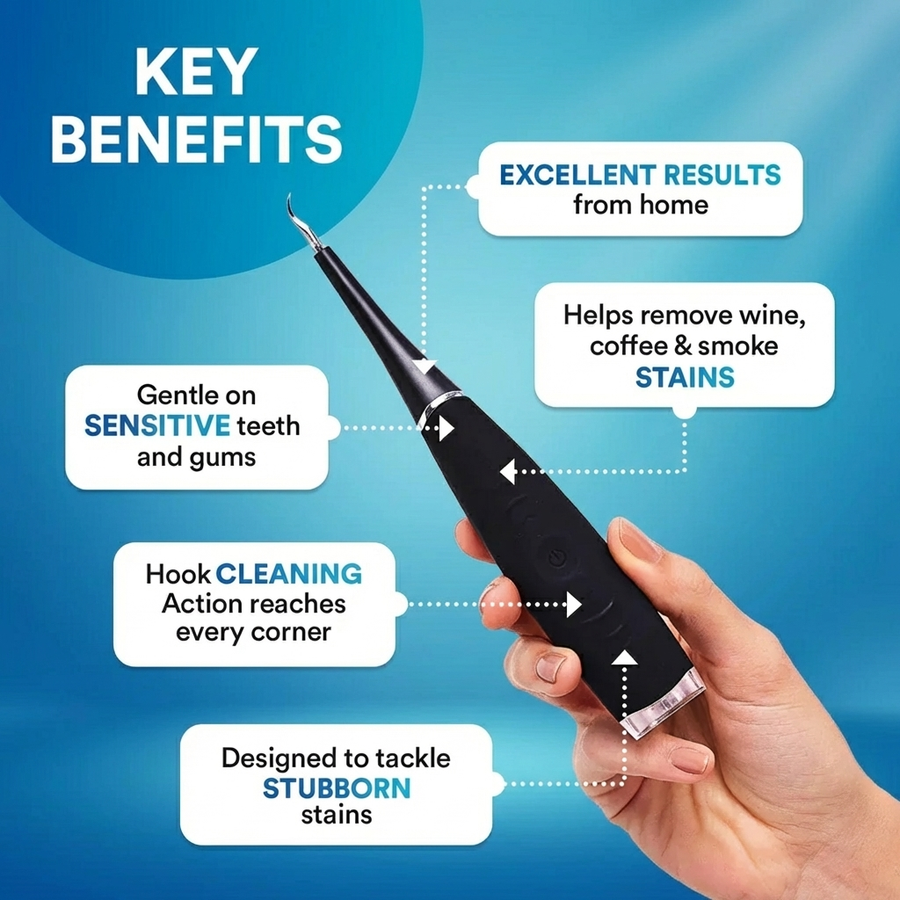
Ultrasonic Cleaning Wand by Lindalia
Fine metal tip and flat polishing tip included. Light contact, no scraping pressure required. The safer, more consistent at-home tool.
See the ProductBuilding the Habit Around the Wand
The wand integrates most naturally after brushing and flossing, as the final step in an oral hygiene session. Brush and floss first to remove fresh plaque and debris. Then use the wand for 2 to 3 minutes on areas of known calculus accumulation. The sequence matters: brushing first removes the soft plaque that would otherwise coat the wand tip and reduce vibrational energy transfer to the calculus beneath.
Frequency of 2 to 3 sessions per week is sufficient for most users. Daily use is not harmful but offers diminishing returns beyond a certain point: once the accessible supragingival calculus has been disrupted at a given session, additional time that day adds little. The value is in frequency across days, not duration per session.
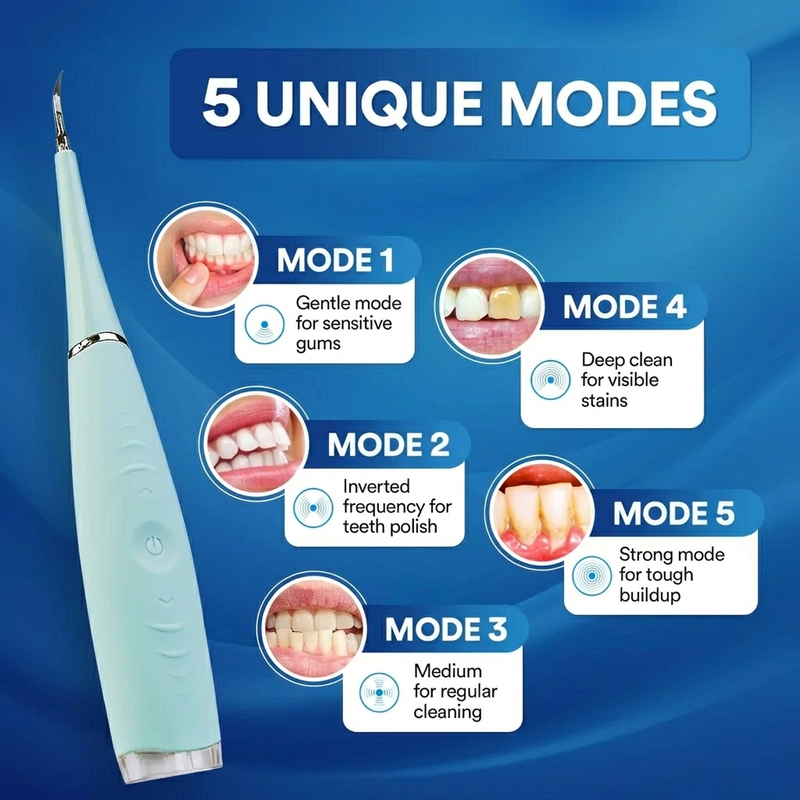
Lindalia Ultrasonic Tooth Cleaner
Pen-sized wand with USB charging. Fine and flat tips included. Multiple intensity modes for controlled, effective at-home use.
See the Product