

What Is Cinnamon Supplement Good For: A Complete Overview
The plain-language guide to what cinnamon supplements actually do, who should take them, who should skip them, and what questions to ask before starting.
If someone who had never heard of cinnamon supplementation asked you to explain it from scratch, what would you say? This guide is that explanation. No assumed knowledge, no technical jargon without definition, no sales language. What it is, what it does, who benefits, and what to watch for.
What a Cinnamon Supplement Is (and Is Not)
A cinnamon supplement is a concentrated form of cinnamon bark, usually from one of two species: Ceylon (Cinnamomum verum) or Cassia (C. cassia and related varieties). It is typically sold as capsules or tablets containing dried bark powder or a standardised extract.
It is a food supplement. This means it is derived from a food ingredient and is regulated as such, not as a pharmaceutical drug. It does not require a prescription. It is not a medicine in the legal or regulatory sense. This has practical implications: it cannot legally claim to treat, cure, or prevent any disease. What it can do, when properly formulated and dosed, is support specific physiological functions that have been studied in clinical research.
The primary clinical function supported by evidence is blood glucose regulation. The mechanisms through which cinnamon achieves this (alpha-glucosidase inhibition, insulin receptor sensitisation, and GLUT4 upregulation) are real and documented. The word "supplement" means it supports the body's existing processes rather than replacing a pharmaceutical intervention.
What Cinnamon Supplements Are Good For
The evidence-based uses fall into primary and secondary categories.
Primary use, with strong clinical evidence: managing post-meal blood glucose spikes, reducing fasting blood glucose over time, and improving insulin sensitivity in people with impaired glucose tolerance or insulin resistance. These are the outcomes most consistently seen in clinical trials at therapeutic doses.
Secondary uses, with moderate evidence: reducing carbohydrate and sugar cravings (as a consequence of more stable blood sugar), improving sustained energy across the day without crashes, and modest improvements in triglycerides and LDL cholesterol through better glycaemic control.
Tertiary uses, with emerging evidence: anti-inflammatory support, digestive comfort, and cognitive clarity through stabilised brain glucose supply. Real but less robustly proven than the primary glycaemic effects.
What cinnamon supplements are not good for: acute treatment of high blood glucose (too slow-acting), replacement of prescribed diabetes medication (insufficient potency and not a regulated treatment), weight loss as a standalone intervention (the effect is indirect and moderate), or general antioxidant supplementation where more potent and better-studied options exist.
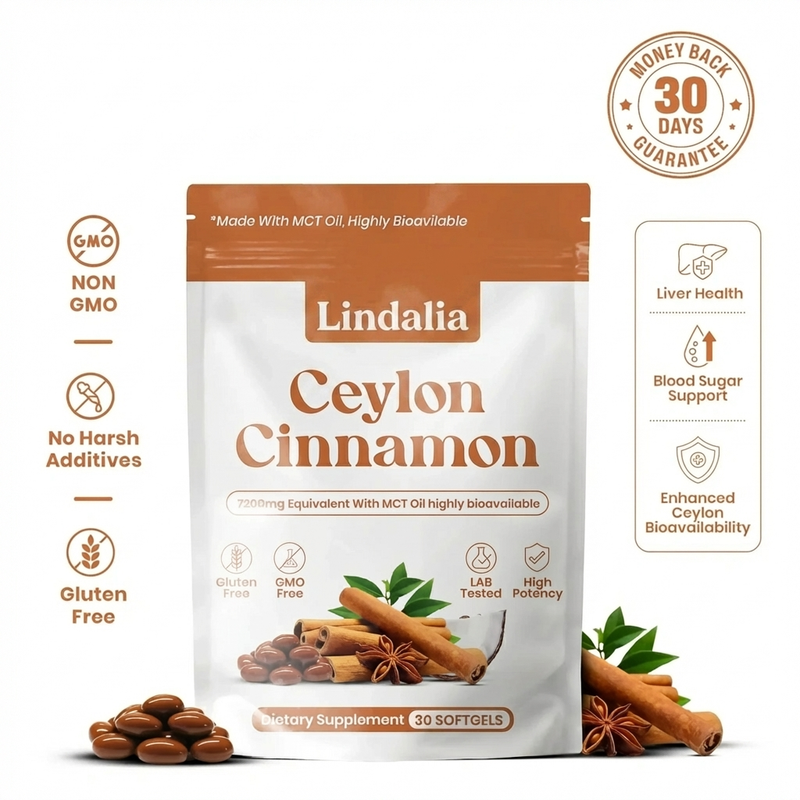
Ceylon Cinnamon 7,200mg with MCT Oil
Post-meal glucose, insulin sensitivity, cravings, energy stability. The evidence-backed uses for cinnamon supplementation, in a formula dosed to deliver them.
See the ProductWho Should Consider a Cinnamon Supplement
The people most likely to notice meaningful, tangible benefits fall into several overlapping groups.
People with pre-diabetic blood markers: fasting glucose between 100 and 125 mg/dL, or HbA1c between 5.7% and 6.4%. These individuals have measurable metabolic dysfunction that cinnamon's mechanisms directly address. Clinical trials consistently show the largest benefits in this population.
People with daily energy crashes and strong carbohydrate cravings. These symptoms are the real-world expression of blood sugar instability, even when formal blood markers are still within normal range. The underlying physiology is the same. Cinnamon addresses it through the same mechanisms.
Women in perimenopause and menopause. Declining oestrogen directly impairs insulin sensitivity. Many women develop new metabolic symptoms during this transition, including blood sugar instability, weight gain around the middle, and energy fluctuations, that they did not experience before. A properly dosed cinnamon formula can provide meaningful support for this specific hormonal shift.
People with PCOS. Insulin resistance is central to PCOS pathophysiology in the majority of affected individuals. Improving insulin sensitivity is a cornerstone of PCOS management. Multiple studies have examined cinnamon specifically in PCOS populations and found improvements in menstrual regularity and glucose markers.
People who are active and want stable training energy. Glycaemic instability is not just a disease concern. Athletes and active individuals experience performance effects from post-meal glucose crashes that affect training quality, recovery, and body composition.
Who Should Not Take a Cinnamon Supplement Without Medical Consultation
This is equally important and often underemphasised. Two groups need specific caution.
People taking blood sugar medications, particularly metformin or insulin: the combined effect of medication plus high-dose cinnamon may lower blood glucose below safe levels. This is not a reason to avoid cinnamon, but it is a reason to start under medical supervision, with blood glucose monitoring, and to inform your prescribing physician. Several users have reported their physicians reducing their metformin dose after stable blood glucose was achieved with combined supplementation. That is a positive outcome but one that requires supervision to achieve safely.
People with liver conditions: at therapeutic doses, even Ceylon cinnamon in very rare individual cases may interact with hepatic metabolism. Given that the entire rationale for choosing Ceylon over Cassia is liver safety, Ceylon is the right choice, but those with known liver disease should still consult their physician before starting a high-dose cinnamon protocol.
Pregnant women: the safety of high-dose cinnamon supplementation in pregnancy has not been adequately studied. Culinary cinnamon in food amounts is considered safe. Therapeutic supplement doses are a different matter and should be discussed with a healthcare provider.
Common Questions, Direct Answers
Can I get the same effect from adding cinnamon to food? No. Therapeutic effects require 1,000 to 6,000 mg daily. A teaspoon of cinnamon in your oatmeal is roughly 2,500 mg, but it is Cassia (coumarin risk at daily high doses), and the bioavailability without a lipid carrier is lower than a well-formulated supplement. One teaspoon of Ceylon daily might get you into a useful dose range, but the coumarin concern disappears only with Ceylon, and the consistency of daily intake is easier to maintain with capsules.
How long before I notice anything? Most users at therapeutic dose notice post-meal energy changes within one to two weeks. Craving reduction typically by week two to three. HbA1c and fasting glucose changes at 8 to 12 weeks.
Does it work if I have normal blood sugar? It will have a smaller but not zero effect. The mechanisms operate across the entire glucose regulation spectrum, not only in diagnosed conditions. Prevention of progression is a real and valuable use case.
Can I take it with other supplements? Ceylon cinnamon, MCT oil, berberine, and chromium have no documented negative interactions with standard wellness supplements like vitamin D, magnesium, or omega-3s. Drug interactions, particularly with blood sugar medications, require medical review.
If you are unsure whether you are a good candidate, get a fasting blood glucose and HbA1c test first. If fasting glucose is above 95 mg/dL or HbA1c is above 5.5%, you have measurable room for improvement and clear reason to consider a therapeutic protocol.
"The question is not whether cinnamon works. The question is whether your specific situation gives it something to work on."
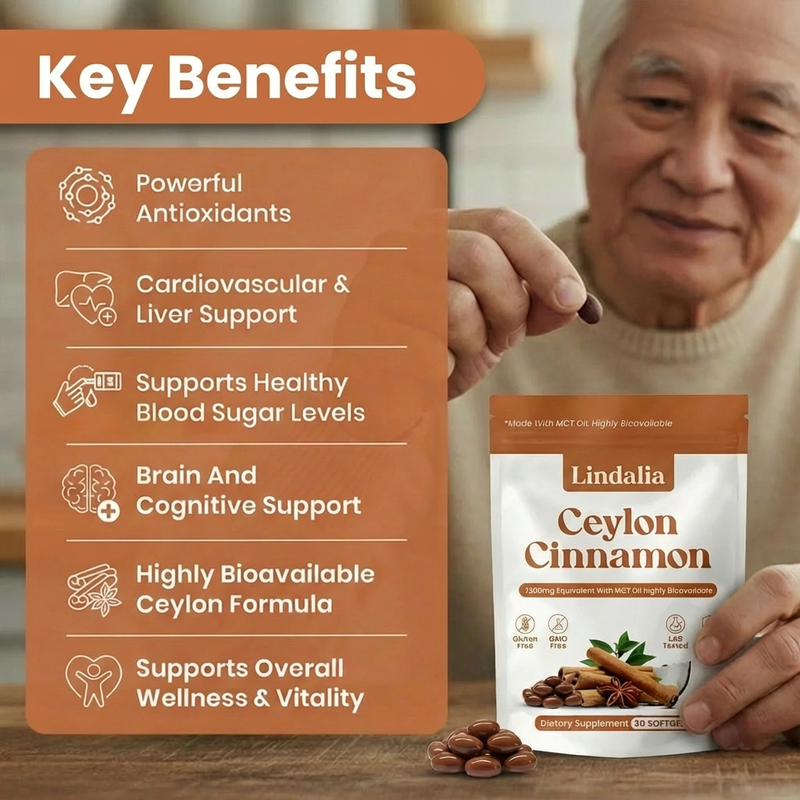
Ceylon Cinnamon 7,200mg with MCT Oil
True Ceylon at therapeutic dose, with MCT, berberine, and chromium. If you have decided this is for you, this is the formula to start with.
See the Product