

What Is Cyperus Rotundus Oil: A Complete Guide to This Hair Removal Secret
From Ayurvedic weed to TikTok viral to clinically studied hair regrowth inhibitor. Here is everything a first-timer needs to know about cyperus rotundus oil.
You have probably seen it on TikTok by now: a golden oil being applied post-waxing with claims about slower regrowth and finer hair. Before you dismiss it as another viral beauty trend, it helps to know that cyperus rotundus has been used in traditional medicine for over two thousand years, and that the mechanism behind its effect on hair follicles has been validated by modern cosmetic science. Here is the full story.
Nut Grass: The Most Underrated Plant in Beauty
Cyperus rotundus is a sedge plant, not technically a grass despite the common name nut grass. It belongs to the Cyperaceae family and grows on virtually every continent, from tropical coastlines to temperate gardens. Farmers consider it one of the most invasive weeds in the world. Beauty researchers consider it one of the more interesting plant actives for skin and hair applications.
The useful part is the underground rhizome: a dense, knobbly root system that stores the plant's bioactive compounds. When processed correctly, the rhizome yields an extract rich in alpha-cyperone and other sesquiterpenes. These compounds have anti-inflammatory properties, antimicrobial activity, and, most relevant here, the ability to inhibit 5-alpha reductase at the hair follicle level.
The plant goes by different names depending on the region: nagarmotha in Ayurvedic texts, xiang fu zi in Chinese medicine, coco grass in West Africa. Every name points to the same plant and many of the same traditional applications. That consistency of use across unconnected cultures over centuries is a meaningful signal that something in this plant genuinely works.
Cyperus rotundus (nut grass) grows on every inhabited continent. The active compounds for hair follicle inhibition are concentrated in the underground rhizome, which is extracted as an oil or pressed for direct use.
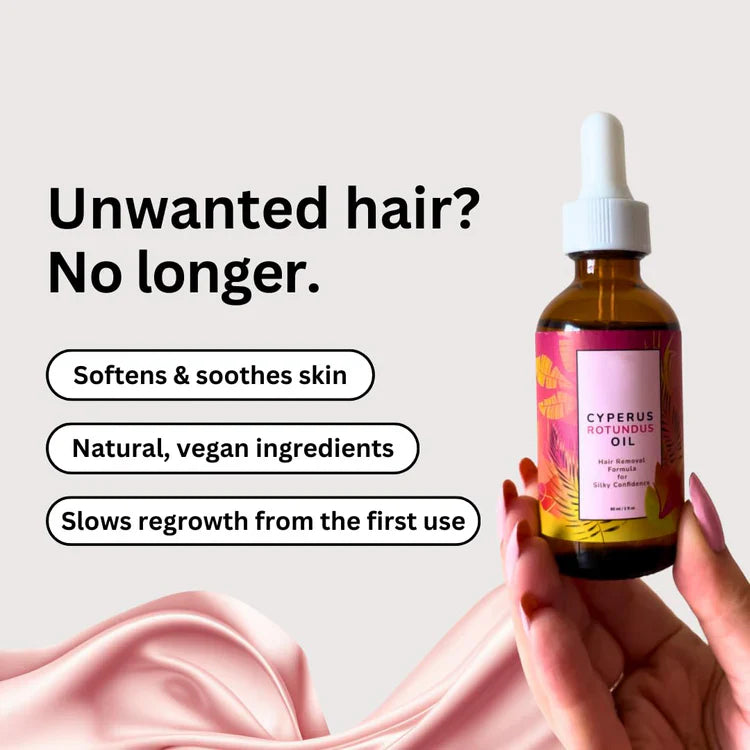
The Oil from Nut Grass That Changes Your Removal Routine
Cyperus rotundus extract with jojoba, rosehip, and tea tree. Two thousand years of use, one proven mechanism.
See the ProductHow Did a Weed Become a Hair Removal Secret?
The traditional uses of cyperus rotundus are extensive. In Ayurveda, it appears in classical texts as a treatment for skin conditions, menstrual irregularities, digestive issues, and hair problems. Practitioners noticed that preparations made from the root affected hair growth and skin texture. Without knowing the biochemistry, they were observing the 5-alpha reductase inhibition effect described in modern research.
In African traditional medicine, cyperus rotundus was used in preparations to manage unwanted hair and skin conditions. In parts of Asia, it was applied to the scalp to address hair thinning and to the body to reduce regrowth after hair removal. The plant's effect on hair growth cycles was documented empirically across cultures that had no contact with each other, which is a strong indicator that the effect is real and repeatable.
Modern cosmeceutical research picked this up in the late 1990s and early 2000s as interest in plant-derived actives grew. The 2005 Journal of Cosmetic Dermatology study formalized what traditional practitioners had observed for centuries: topical application of cyperus rotundus extract after hair removal measurably slows regrowth compared to a placebo.
Multiple cultures across Asia and Africa independently documented cyperus rotundus effects on hair growth. The 2005 JCD study confirmed the mechanism: inhibition of 5-alpha reductase at the hair follicle level.
What the TikTok Trend Gets Right and What It Gets Wrong
The viral attention cyperus rotundus oil received on TikTok in 2025 and 2026 brought a lot of new people to the ingredient, which is net positive. But like most viral beauty content, it simplified the nuances in ways worth correcting.
What TikTok gets right: the oil does work. Applied consistently after hair removal, it slows regrowth. The results are visible and measurable. The before-and-after comparisons that circulated were not fabricated. The mechanism is real and the ingredient has legitimate research behind it.
What TikTok gets wrong: some creators described it as a permanent hair removal method, which it is not. Cyperus rotundus oil slows regrowth. It does not eliminate hair growth permanently. Some content showed the oil being applied to skin that had not been recently depilated, which will not produce follicle inhibition results. And many creators did not explain that results are cumulative across cycles rather than immediate after one application.
What Is Actually in the Bottle
A quality cyperus rotundus oil is not a simple single-ingredient product. The cyperus rotundus extract is the active, but it needs carrier oils to deliver it effectively to the follicle and to make the formula comfortable for post-removal skin, which is more sensitive than undisturbed skin.
Jojoba oil serves as the primary carrier. Its molecular structure closely matches human sebum, which allows it to penetrate the follicle channel and carry the cyperus rotundus compounds with it. Rosehip oil contributes fatty acids that support skin repair after waxing or shaving. Tea tree oil provides antibacterial protection, which reduces the incidence of infected follicles and ingrown hairs in the bikini zone and underarms.
The ratio and quality of these ingredients matter. Cyperus rotundus extract should be among the primary ingredients, not listed near the bottom of an INCI list where concentration is negligible. The carrier oils should be cold-pressed or otherwise processed to preserve their fatty acid profiles. These details separate a formula that delivers the promised results from one that leverages a trendy ingredient name without the substance.
For centuries, people used nut grass without knowing the chemistry. The research just gave a name to what they already observed.
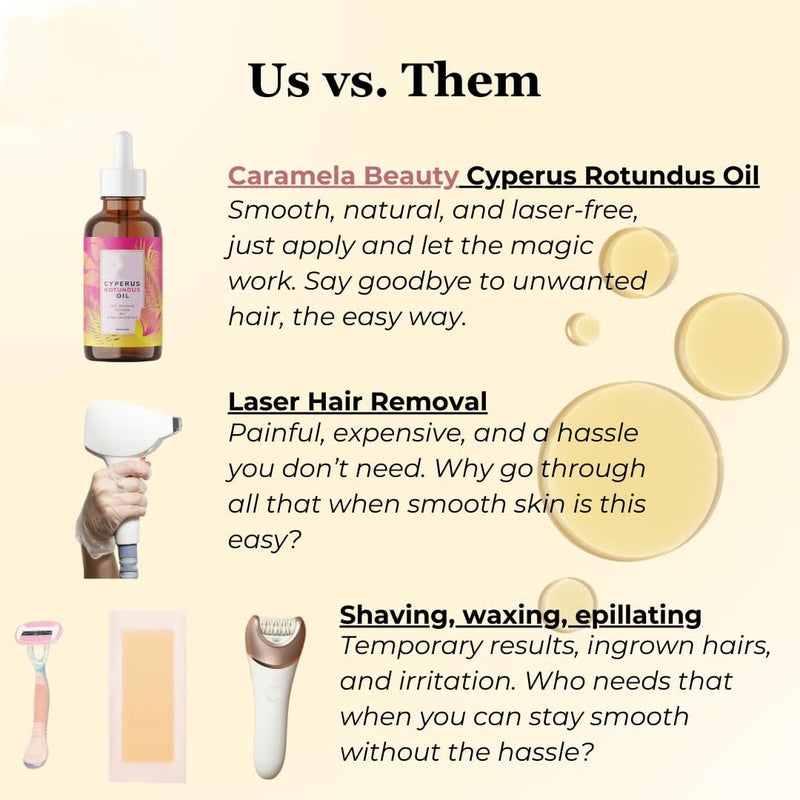
Cyperus Rotundus Where It Matters
A formula where the active is actually active. Cyperus rotundus extract as a primary ingredient, with jojoba, rosehip, and tea tree.
See the ProductThe Three Questions Everyone Asks Before Trying It
Does it actually work? Yes, with correct application. The mechanism is real. The clinical evidence exists. The traditional use data is consistent. Apply it after every removal session and results build over cycles. Anyone expecting immediate magic from one application will be disappointed, but anyone who maintains the routine through four cycles will see a meaningful change.
Is it safe? For the vast majority of people, yes. The ingredients are well-tolerated, the formula is designed for post-removal skin, and no systemic toxicity has been identified in topical use. A patch test before first use is always sensible for any new skincare product, particularly on sensitive zones.
How long does it take? The first measurable change is typically noticed in cycle 1 or 2: regrowth that was showing up in 2 days now takes 4 or 5. The more significant shift, going from a several-times-per-week shaving schedule to a once-a-week or biweekly schedule, usually comes by cycle 3 or 4. The full compounding effect builds through cycle 6 and beyond.
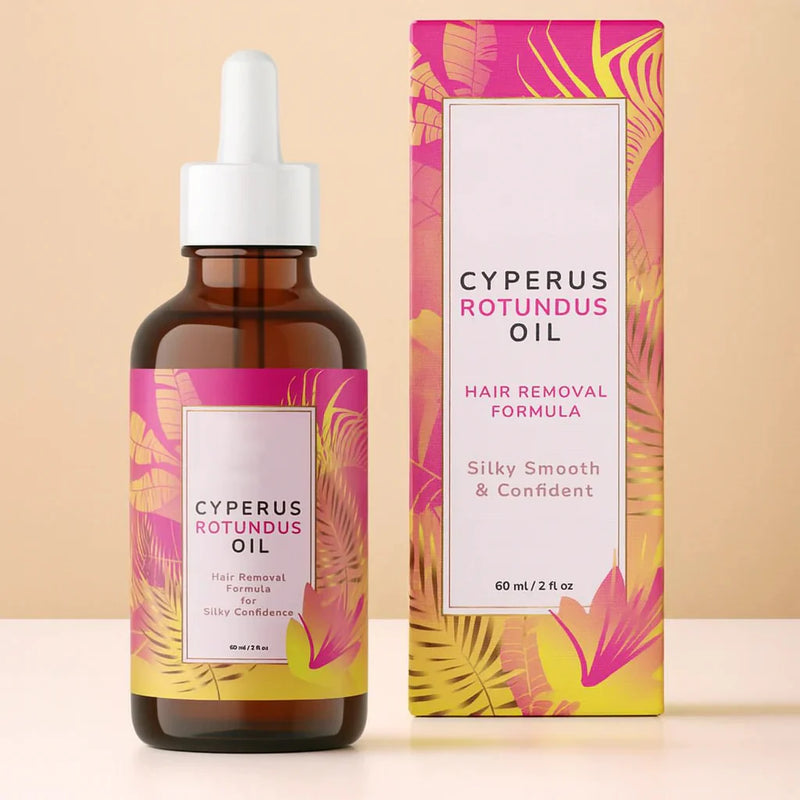
Cyperus Rotundus Hair Removal Oil
All the traditional use, all the research, formulated correctly for post-removal application. For every zone.
See the Product