

Wild Oregano Oil Capsules: Why Wild-Harvested Matters
Not all oregano oil capsules start with the same plant. The difference between wild and cultivated oregano is measurable, significant, and directly affects what you get in every capsule.
The label on an oregano oil capsule can say "oregano oil" without specifying whether the oregano was wild-harvested or commercially grown. That distinction determines the carvacrol concentration, which determines the therapeutic value of every capsule. Understanding the difference between wild and cultivated oregano is the most important piece of knowledge for anyone shopping for oregano oil supplements.
The Species and Chemistry That Make Oregano Medicinal
The therapeutic properties of oil of oregano come from a specific phenolic compound: carvacrol. Not all plants in the genus Origanum contain significant carvacrol. Not all oregano species are equal, and within the same species, growing conditions produce dramatic differences in carvacrol concentration.
The species with the highest documented carvacrol content is Origanum vulgare, specifically the subspecies found growing wild in Mediterranean mountain regions, particularly in Turkey, Greece, and the Aegean islands. In the wild, these plants grow in rocky, nutrient-poor soils at altitude, under significant environmental stress from UV radiation, drought, and temperature variation.
This environmental stress is not incidental to the plant's chemistry. It is the driver of it. Plants produce phenolic compounds like carvacrol as a defense mechanism against pathogens, insects, and UV damage. The harsher the growing environment, the more heavily the plant invests in these protective compounds. Wild Origanum vulgare growing in rocky Mediterranean terrain typically contains 70 to 86% carvacrol in its essential oil.
The term oregano oil can legally refer to oil extracted from any Origanum species or cultivar. Some oregano species used in cultivation contain as little as 10 to 20% carvacrol in their essential oil. A label that does not specify the species (Origanum vulgare), the origin region, or the carvacrol percentage is not giving you the information needed to assess potency.
Cultivated Oregano: The Carvacrol Gap
When oregano is grown commercially in irrigated, nutrient-rich agricultural conditions, the plant has less reason to produce defensive compounds. The growing conditions are favorable, the plant experiences less stress, and the investment in phenolic production is reduced. Commercially cultivated Origanum vulgare typically yields essential oil with 40 to 55% carvacrol, compared to 70 to 86% in wild-harvested plants.
That gap is not trivial. A softgel containing oil with 45% carvacrol delivers roughly half the active compound per capsule compared to a softgel containing oil with 85% carvacrol at the same oil volume. To get an equivalent therapeutic dose from a lower-carvacrol product, you would need to take roughly twice as many capsules.
Additionally, the ratio of secondary compounds changes with cultivation. Wild oregano tends to have a more consistent and higher ratio of thymol relative to carvacrol, which matters because thymol and carvacrol act synergistically. The combined phenolic profile of wild-harvested oregano is harder to replicate in cultivated varieties, even when farmers attempt to select for high-carvacrol strains.
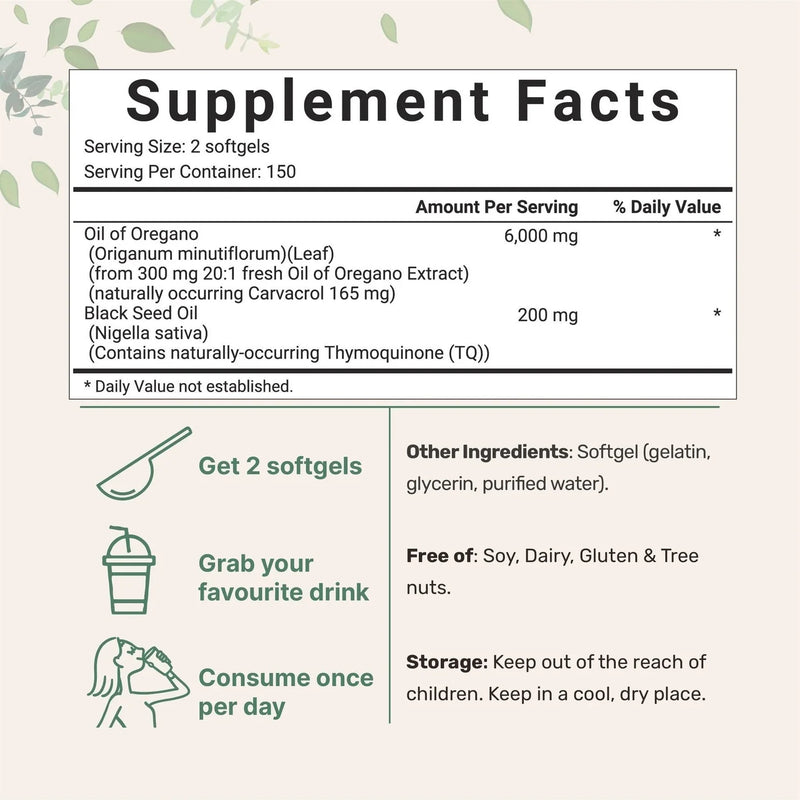
Oil of Oregano Softgels
High-carvacrol wild oregano oil in softgel form. No taste, precise dose, intestinal delivery.
See the ProductWhy Wild-Harvested Is Harder to Source (and Why It Is Worth It)
Wild-harvesting oregano from Mediterranean mountain regions is labor-intensive. The plants grow in areas inaccessible to mechanical harvesting. Human harvesters collect the flowering tops during peak season (typically June and July, when carvacrol concentration is at its annual maximum). Yields per hectare are a fraction of what cultivated plots produce.
This explains the price premium on wild-harvested products. It also explains why some supplement manufacturers use cultivated oregano: it is cheaper, more consistent in supply, and easier to scale. The consumer pays less upfront and receives less active compound per capsule.
For immune support or mild antifungal use, lower-carvacrol products may still provide some benefit. But for therapeutic applications, particularly addressing persistent gut dysbiosis, recurring fungal infections, or intensive immune support during illness, the higher carvacrol concentration of wild-harvested oil makes a meaningful difference in outcome.
Wild oregano does not produce more carvacrol to be impressive. It does so to survive a harsh environment. That survival chemistry is exactly what makes it medicinally relevant.
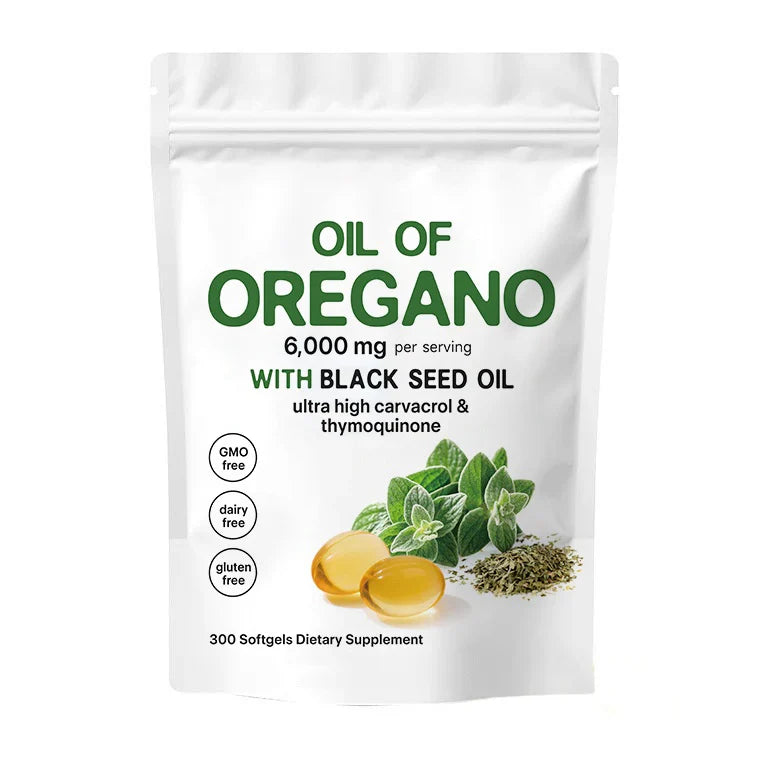
Oil of Oregano Softgels
Wild-harvested Origanum vulgare, high carvacrol, softgel delivery. See why origin changes everything.
See the ProductWhat to Look for on the Label
When evaluating an oregano oil supplement, look for four things on the label or product description. First, the species name: Origanum vulgare, not just oregano. Second, the origin: Mediterranean, Turkish, Greek, or specifically named mountain regions. Third, the carvacrol percentage: ideally 70% or higher. Fourth, the absence of synthetic fillers, artificial colors, or unnecessary additives.
Third-party testing certificates are an additional quality signal. A supplement company that posts certificates of analysis from independent laboratories is demonstrating transparency about what is actually in the capsule. The certificate should confirm the carvacrol percentage claimed on the label.
Some products list carvacrol content in milligrams per capsule rather than as a percentage. This requires knowing the total oil volume per capsule to assess. If a capsule contains 200 mg of oregano oil and 150 mg is carvacrol, that is 75%, which is excellent. If the same 150 mg carvacrol comes from 400 mg of oil, that is only 37.5%.
Wild oregano is harvested at its peak in June and July in Mediterranean regions. This is when carvacrol concentration reaches its annual maximum, typically 10 to 15% higher than during the rest of the year. Suppliers who harvest outside this window or blend harvests from different seasons will have lower average carvacrol. Ask your supplier about their harvest timing if transparency matters to you.
The Culinary Oregano Confusion
A question that comes up regularly: can you get the same benefits from eating culinary oregano in food or taking culinary oregano capsules? The short answer is no, not at therapeutic concentrations.
The culinary oregano used in cooking is typically a mix of Origanum vulgare and related species or cultivars. The concentrations of carvacrol in fresh or dried culinary oregano are in the range of 0.1 to 0.3% of the herb by weight. A quality wild oregano oil concentrate may be 100 to 300 times more concentrated in active compounds per gram of product than the dried herb.
You could theoretically obtain a therapeutic dose of carvacrol from culinary oregano, but it would require consuming quantities of oregano that are not food-compatible. Supplement-grade concentrated oil is the only practical way to reach the concentrations documented in antimicrobial and antifungal research.
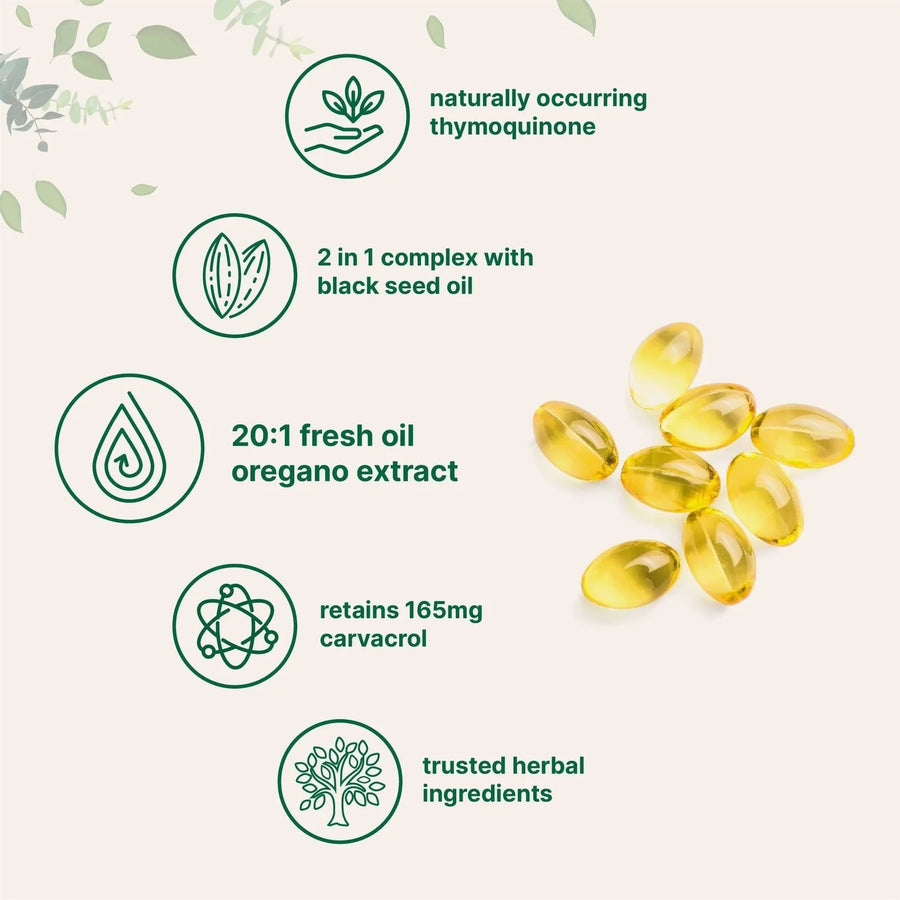
Oil of Oregano Softgels
Wild-harvested Origanum vulgare, high carvacrol content, intestinal-release softgel. 1,900+ reviews.
See the Product