

Aliver Color Changing Foundation: How It Stacks Up Against the Competition
A detailed look at Aliver's adaptive formula: what the technology actually does, how it performs in practice, and what to know before you buy.
Aliver has become one of the more recognizable names in affordable beauty, with a catalogue that spans everything from hair care to skincare and cosmetics. Their color changing foundation has picked up a fair amount of attention online, partly because of the price point and partly because of packaging that photographs well. This review looks past the surface and gets into what the product actually does, who it works for, and where it falls short.
Disclosure: Lindalia sells a color changing foundation stick that competes directly with the products discussed in this article. This review is written to help readers make informed decisions, not to steer toward any particular outcome. All observations are based on available product information, ingredient analysis, and publicly reported user experiences.
What Is Aliver and Where Does It Fit in the Market
Aliver is a Chinese beauty brand that distributes primarily through international e-commerce platforms including Amazon, AliExpress, and various independent online retailers. The brand positions itself in the affordable-to-mid range tier, with most products landing between $8 and $22. Their color changing foundation is one of their flagships in the makeup category and has been listed on major platforms for several years.
The brand markets the product with terms like "adaptive tone" and "natural finish match," which are common claims in this category. What matters more than the marketing copy is what the formula actually contains and how the color adaptation mechanism works.
Aliver is a high-volume catalog brand producing dozens of product lines simultaneously. Color changing foundation is one SKU among many, which can affect the level of formulation depth given to any single product.
The Color Changing Mechanism: What Is It Actually Doing
Based on available ingredient information and product analysis, Aliver's color changing effect appears to rely on thermochromic dye technology rather than pH-responsive microencapsulation. This is an important distinction and one that affects how the product performs in real use.
Thermochromic dyes shift color in response to temperature changes. When the product comes into contact with warm skin, the pigment changes from a lighter to a slightly darker hue. The adaptation is reactive but limited: it responds to surface temperature rather than to your actual skin tone. Two people with very different complexions will see the same thermal shift if their skin temperature is similar.
This is fundamentally different from pH-responsive microencapsulation, where pigments are encapsulated in polymer shells that rupture when they contact the acid mantle of the skin (typically pH 4.5 to 6.2). That system responds to skin chemistry, which correlates more meaningfully with undertone and natural pigmentation.
The thermochromic approach is not inherently bad, but it is less precise. It works reasonably well for people whose natural complexion is close to the product's base shade. For anyone with a more distinct undertone or a complexion at the lighter or deeper end of the range, the thermal shift may not do enough to bridge the gap.
Formula and Ingredients
Aliver's color changing foundation is typically formulated as a cream-to-powder or light liquid texture. It tends to include standard emollient bases alongside the color-adaptive pigment system. Some versions of the product include a small amount of niacinamide, which is a positive addition given its well-documented benefits for tone evenness and pore appearance.
Coverage is positioned as light to medium, which aligns with most user reports. The finish tends toward a natural or slightly satin appearance, though this can vary depending on skin type. On oilier skin, the product may shift toward a more matte finish due to how the emollients interact with sebum; on drier skin, it can look slightly powdery if not applied over adequate moisturizer.
The formula does not appear to include dedicated plumping or skin-conditioning actives beyond basic emollients. It is a straightforward cosmetic product rather than a hybrid skincare-makeup formula.

Try a Foundation That Adapts to Your Skin Chemistry
Lindalia uses pH-responsive microencapsulation that reacts to your skin's acid mantle, not just surface temperature. Lightweight stick format with niacinamide and collagen.
Shop LindaliaShade Range and Adaptation Limits
One of the most common questions about any color changing foundation is whether it actually works across a meaningful range of skin tones. With Aliver, the honest answer is that the adaptation is moderate in scope.
The product generally works well for light to light-medium complexions with neutral or slightly warm undertones. For deeper complexions, the base shade tends to be too light to begin with, and the thermochromic shift does not add enough depth to compensate. For very fair or cool-toned complexions, the shift may push in a warm direction that does not match.
User reviews online reflect this pattern: positive reviews tend to cluster among medium-toned users, while critical reviews more often come from users at the lighter or deeper ends of the range. This is not unique to Aliver — it is a common limitation of thermochromic systems.
What Works
- Low price point, accessible on major platforms
- Light, buildable coverage with a natural finish
- Some formulas include niacinamide
- Blends reasonably well for medium complexions
- Widely available, easy to reorder
What Doesn't
- Thermochromic mechanism is less precise than pH-responsive
- Shade range is narrow in practice
- Batch consistency issues reported across reorders
- Limited dedicated skin actives
- No integrated application tool

See What Skin-Chemistry Adaptation Looks Like
Unlike temperature-based systems, Lindalia's encapsulated pigments respond to your skin's unique pH signature. The result is a shade that genuinely belongs to you, not a uniform shift.
Learn MoreOxidation and Long-Term Wear
Oxidation is one of the most common complaints about color changing foundations, and Aliver is not immune to this issue. Several users report that the color shifts in the first hour or so of wear but then continues to darken slightly throughout the day. This secondary shift is typically the result of iron oxide pigments (commonly used as colorants) reacting with air and skin oils rather than an intentional adaptation mechanism.
The distinction matters because it means the color you see at application may not be the color you see six hours later. Some users find the final settled shade works well for them; others find it pulls too orange or too dark. This is worth testing carefully before committing to a full-face application on an important day.
"A low price buys access, not precision. With thermochromic technology, the shift is real but the range is limited. Know what you're buying."
Who Aliver Color Changing Foundation Actually Works For
To be straightforward: Aliver's color changing foundation is a decent entry-level product with real limitations. It is best suited to someone who wants to try the color changing category without committing significant money, and whose skin tone falls in the light to medium neutral range.
If you have dry or mature skin, the formula may need extra preparation, including a good moisturizer and possibly a hydrating primer, to prevent it from looking patchy or dry by midday. The product does not include dedicated ingredients for these concerns.
For someone with an oily complexion, it performs somewhat better in terms of staying power, though it may look slightly flat rather than natural by late afternoon.
For deeper complexions, this is not the right formula. The base shade is not close enough and the adaptation range is not wide enough to compensate.
Comparing Aliver to Other Options at the Same Price
At the $8–18 price point, Aliver competes directly with TLM, Vima, and similar platform-distributed brands. TLM tends to have a slight edge in blendability and a more established user base, which means more reliable feedback online. Vima occupies similar territory to Aliver in terms of formula depth and shade range.
If you are willing to spend a bit more, you move into the territory of products with more sophisticated adaptation mechanisms, better ingredient profiles, and more predictable results. The additional investment tends to pay off in coverage quality and longevity, especially for users with specific skin type concerns.
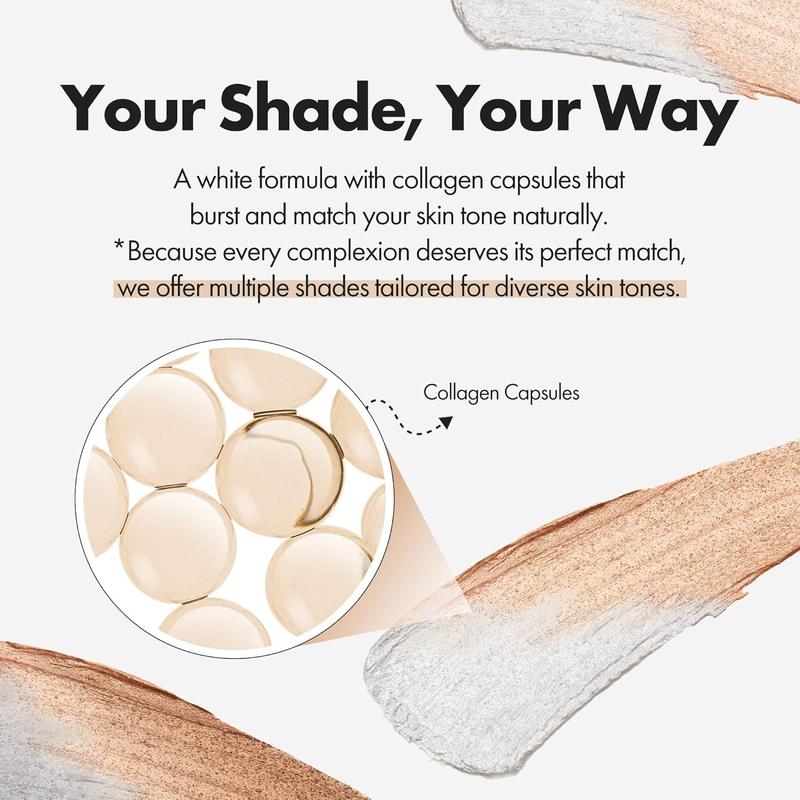
Lindalia: Designed Around Skin Chemistry, Not Just Temperature
A full-spectrum approach: pH-responsive pigments, niacinamide for pore refinement, collagen for surface smoothing, and a stick format that applies clean and blends fast.
Shop the StickBottom Line
Aliver's color changing foundation does what it says, to a point. The color shift is real, the formula is accessible, and for the price, it is a reasonable way to explore the category. The limitations are the adaptation mechanism (thermochromic, not pH-responsive), the narrow effective tone range, and the risk of post-application darkening that is common with iron oxide formulations.
If you are curious about color changing foundation and want a low-cost way to try it, Aliver is not a bad starting point. If you have specific skin concerns, a distinctive undertone, or you want results you can count on, it is worth considering what a more sophisticated formulation offers before deciding.
When trying any color changing foundation for the first time, test it on your jawline and wait 60 to 90 seconds before assessing the shift. The initial color on dispensing is rarely the settled shade. Also test for oxidation over two to three hours to see if the color continues to change after the initial activation.